Roman tombstone
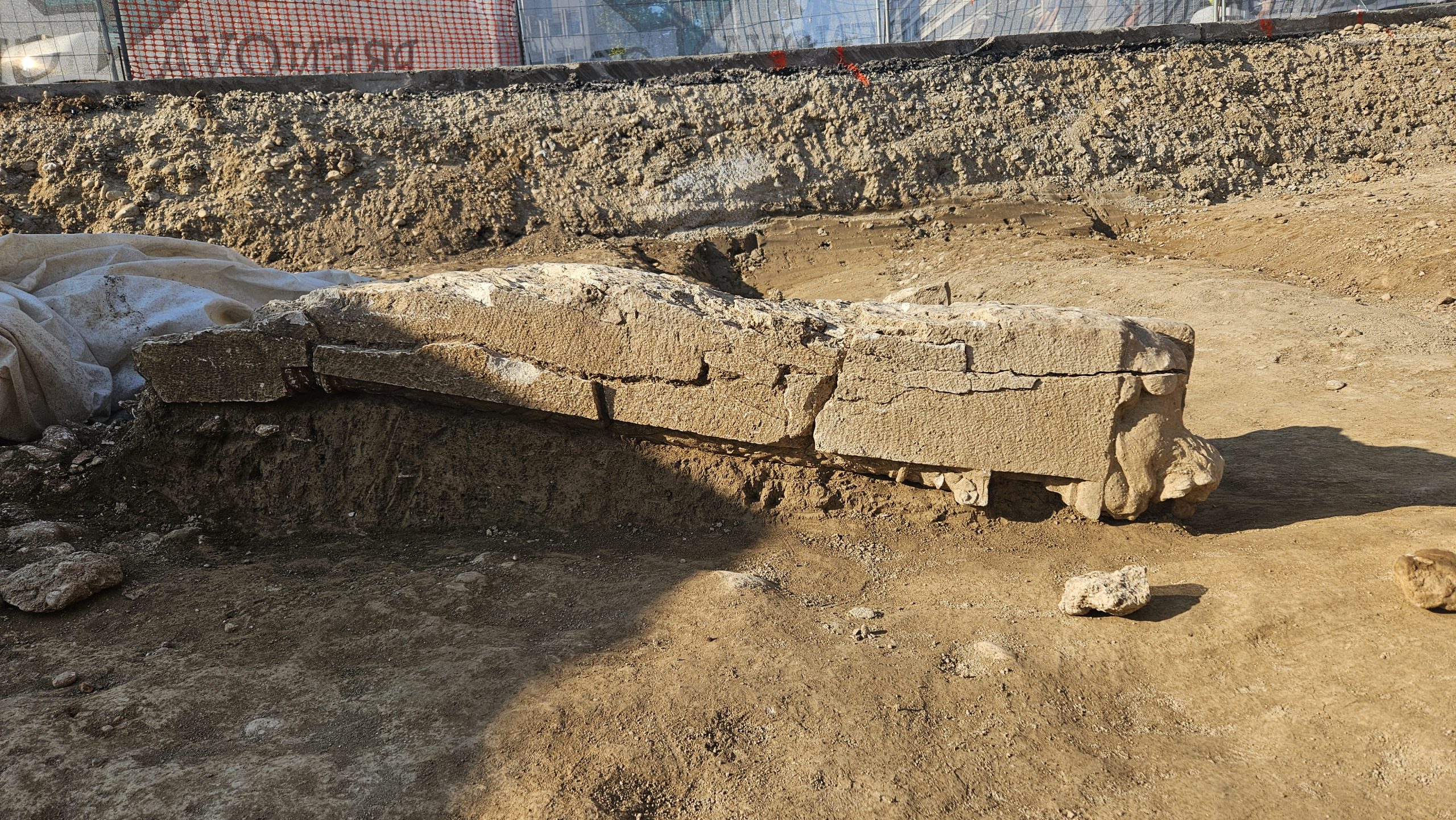
Upon viewing the find, it was determined that it was a Roman-era tombstone made of limestone from the Nabirinka region. The tombstone measures approximately 1.7 meters in length, 0.75 meters in width, and between 0.30 and 0.12 meters in depth. It is dated to the 1st century, most likely in its 1st half.
The text is based on the records of experts (Dr. Bernard Županek, Dr. Bojan Djurić, Mija Topličanec and Mag. Špela Govže), who visited the find at the end of July and provided their expert assessments.
The discovered Roman tombstone represents an object of cultural and historical, art and archaeological value. The currently visible parts of the richly decorated ornamentation clearly indicate that it is a Roman tombstone with exceptionally high-quality relief decoration.
Following its already recognizable characteristics, it is expected to rank among the most important and best-preserved such objects not only in the collection of the City Museum of Ljubljana, but also in the entire heritage of Emona, as it is characterized by an exceptionally rich decorative design and a high level of stonework execution.
The object was most likely an integral part of a larger funerary monument related to one of the more important personalities or families in Emonia at the time.
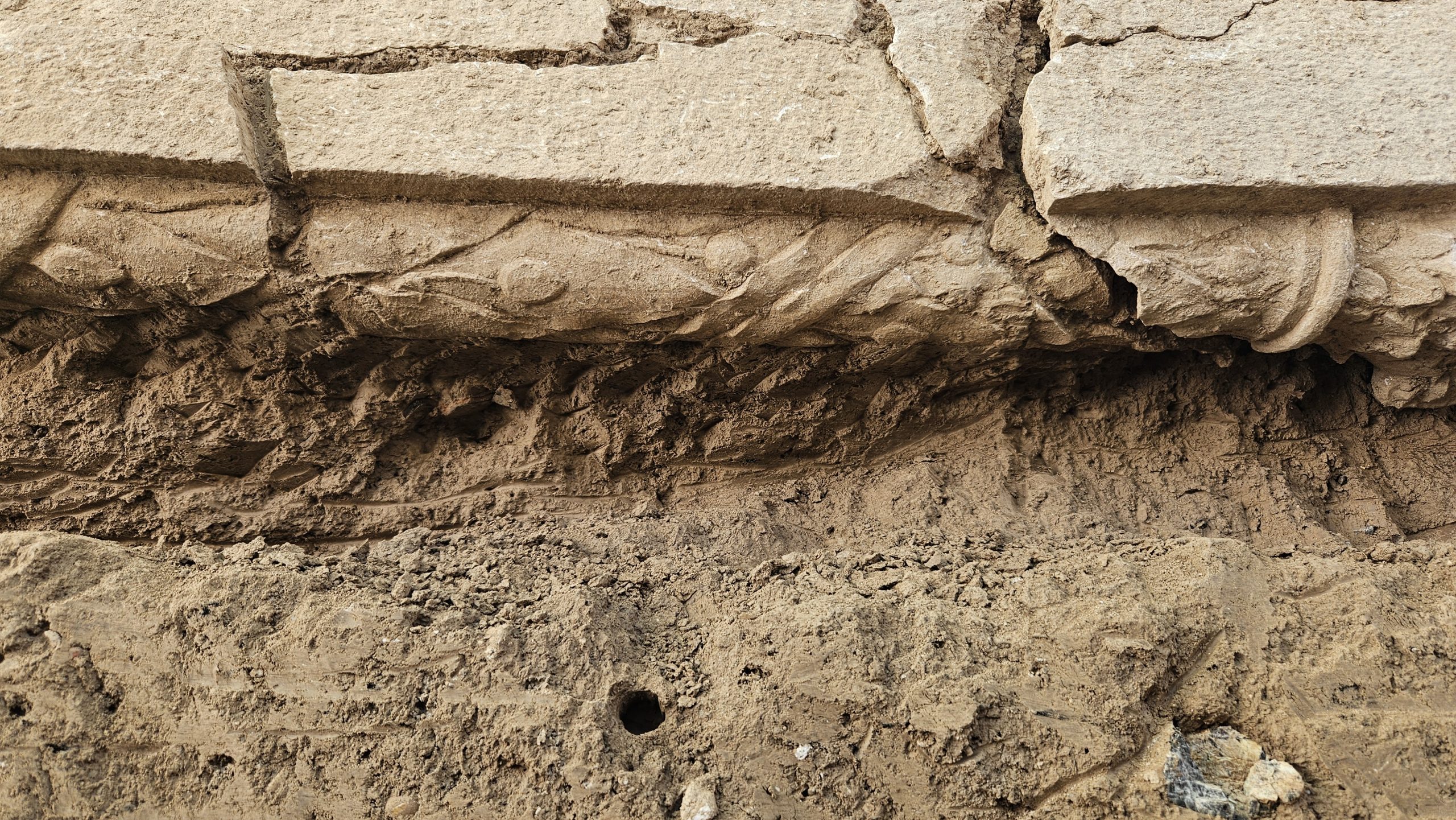
The newly discovered tombstone is a funerary stele from the Nabir Basin limestone, which was imported to Emona as a finished product. It is the only one of its kind in the Slovenian area and of a similar shape; similar examples are known, but relatively rare and occur mainly in the centers of the 10th Italian region (Venetia et Histria).
These are wealthier tombstone carvings, which may also have portraits in addition to the inscription. Chronologically, the stele dates to the 1st century, most likely the first half of it.
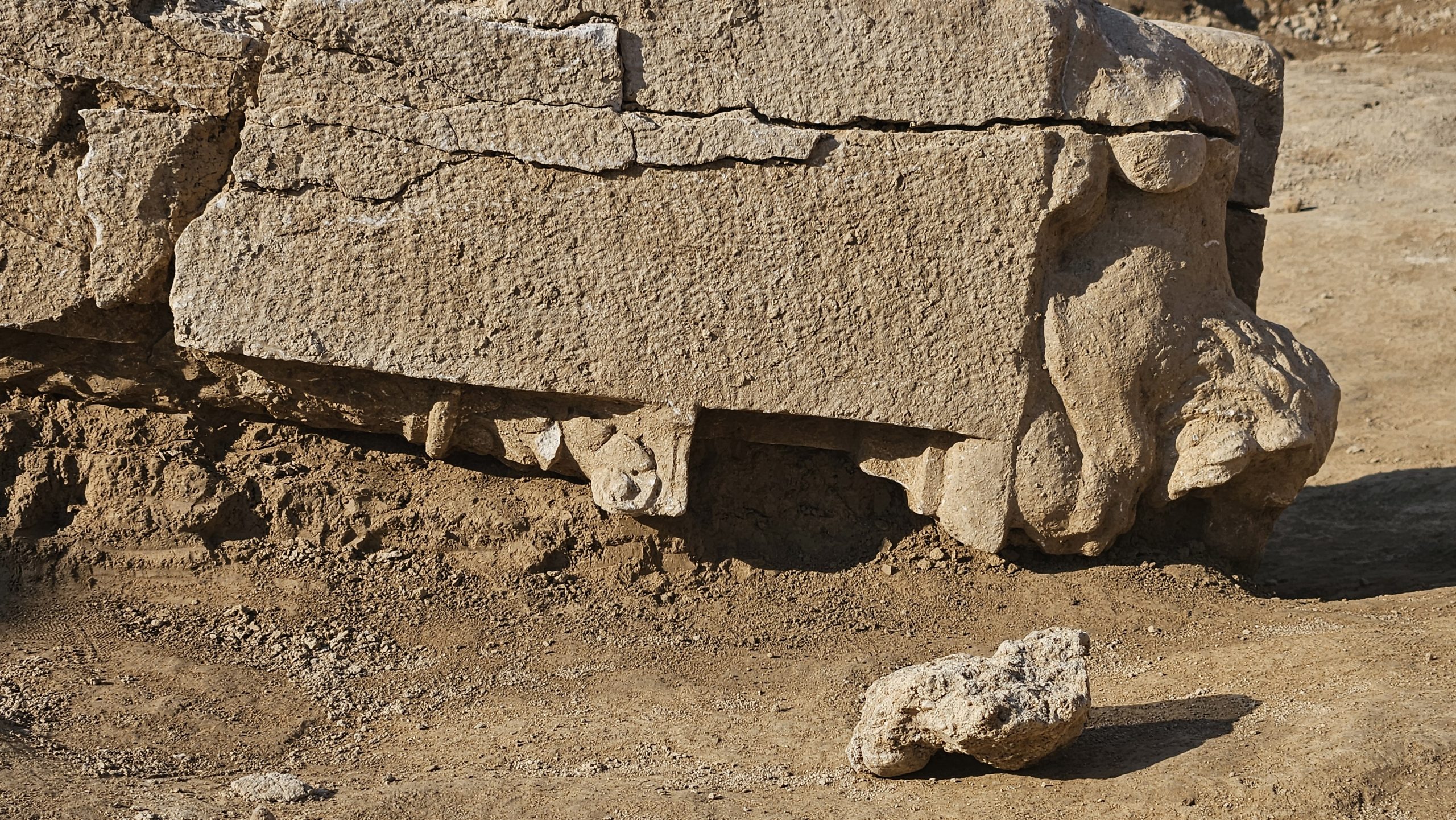
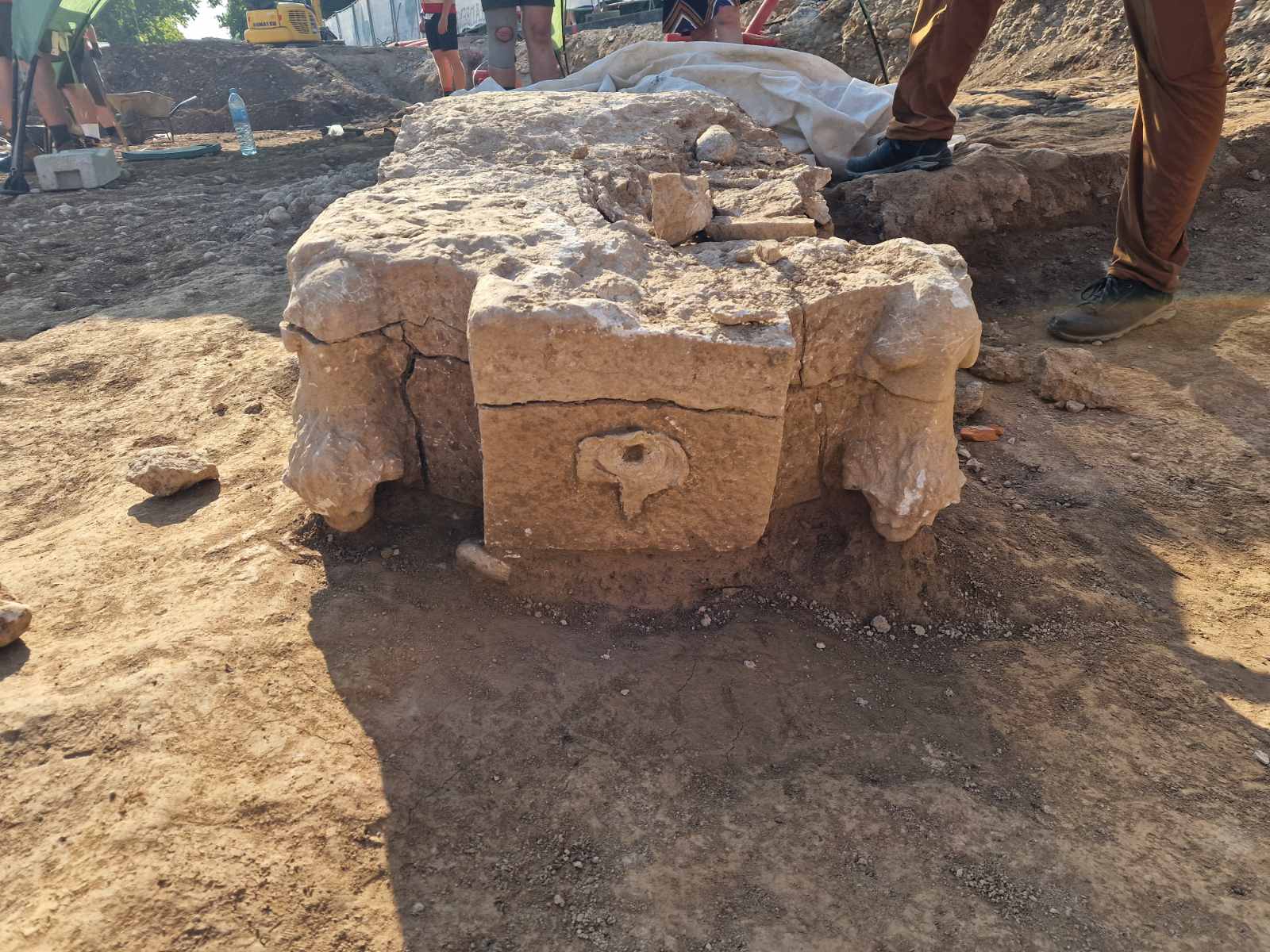
For this form of one-roomed edicular stele, the characteristic features are the acroterial lion placed perpendicular to the pedestal and the cube-shaped base serving as a base for the acroterium in the form of a plastic sculpture (Ikar, Victoria, etc.).
Necessary conservation-restoration measures
Due to the importance of the object, its rarity, and its great potential for museum presentation, the decision was made to carry out a comprehensive conservation and restoration intervention. The tombstone is extremely damaged; several horizontal cracks are visible, and there are also vertical fractures; individual parts of the stone are completely disintegrated. Given the alarming state of the object, intervention is urgently needed; for the long-term preservation of the tombstone, a comprehensive conservation and restoration approach is crucial, involving the execution of appropriate natural science investigations.
The tombstone will therefore be transported to the ZVKDS Restoration Center, as it requires utmost caution when handling it due to the extremely fragile state of the stone.
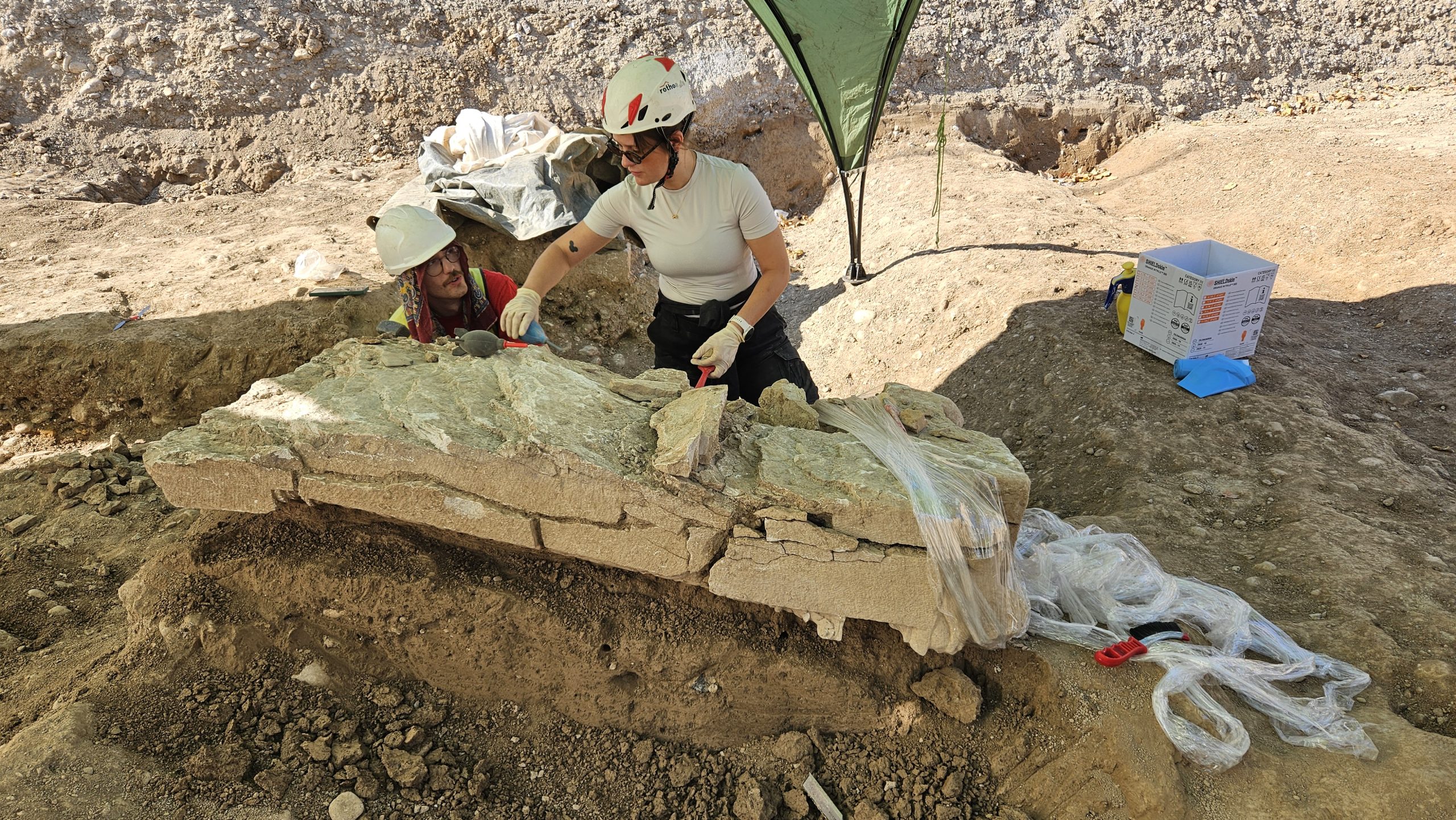
Due to the extremely fragile condition of the rock, the tombstone must be handled with extreme caution.
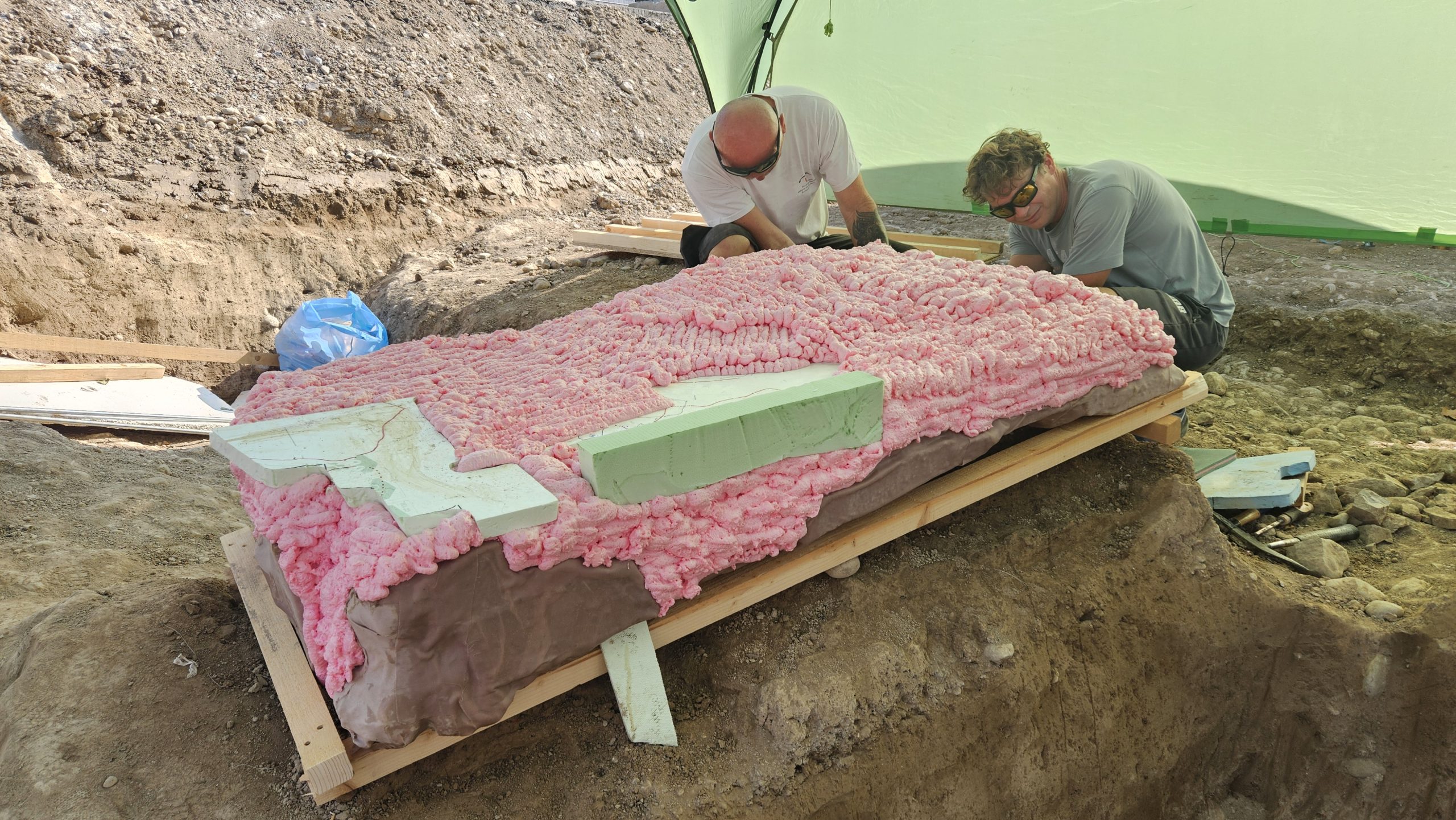
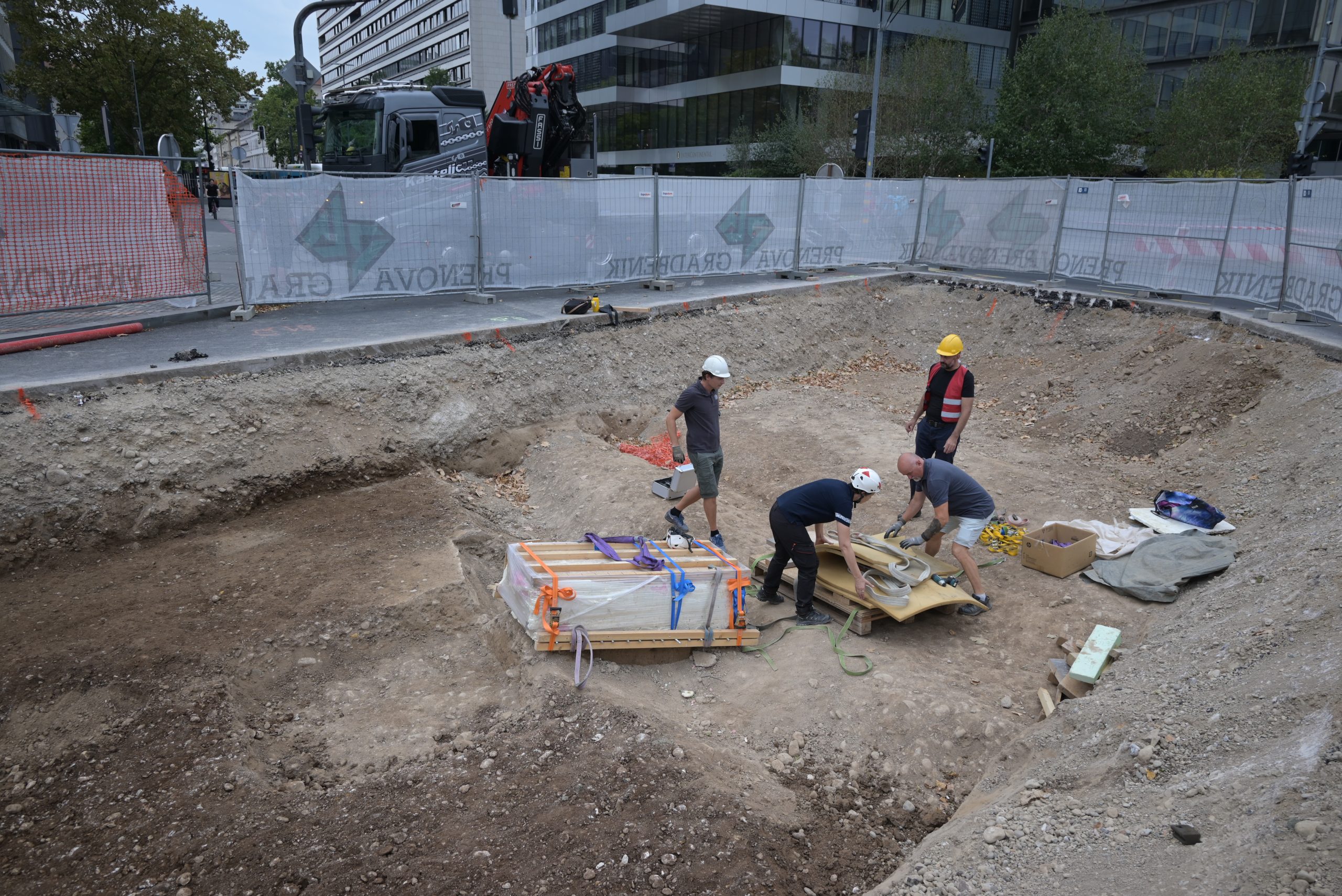
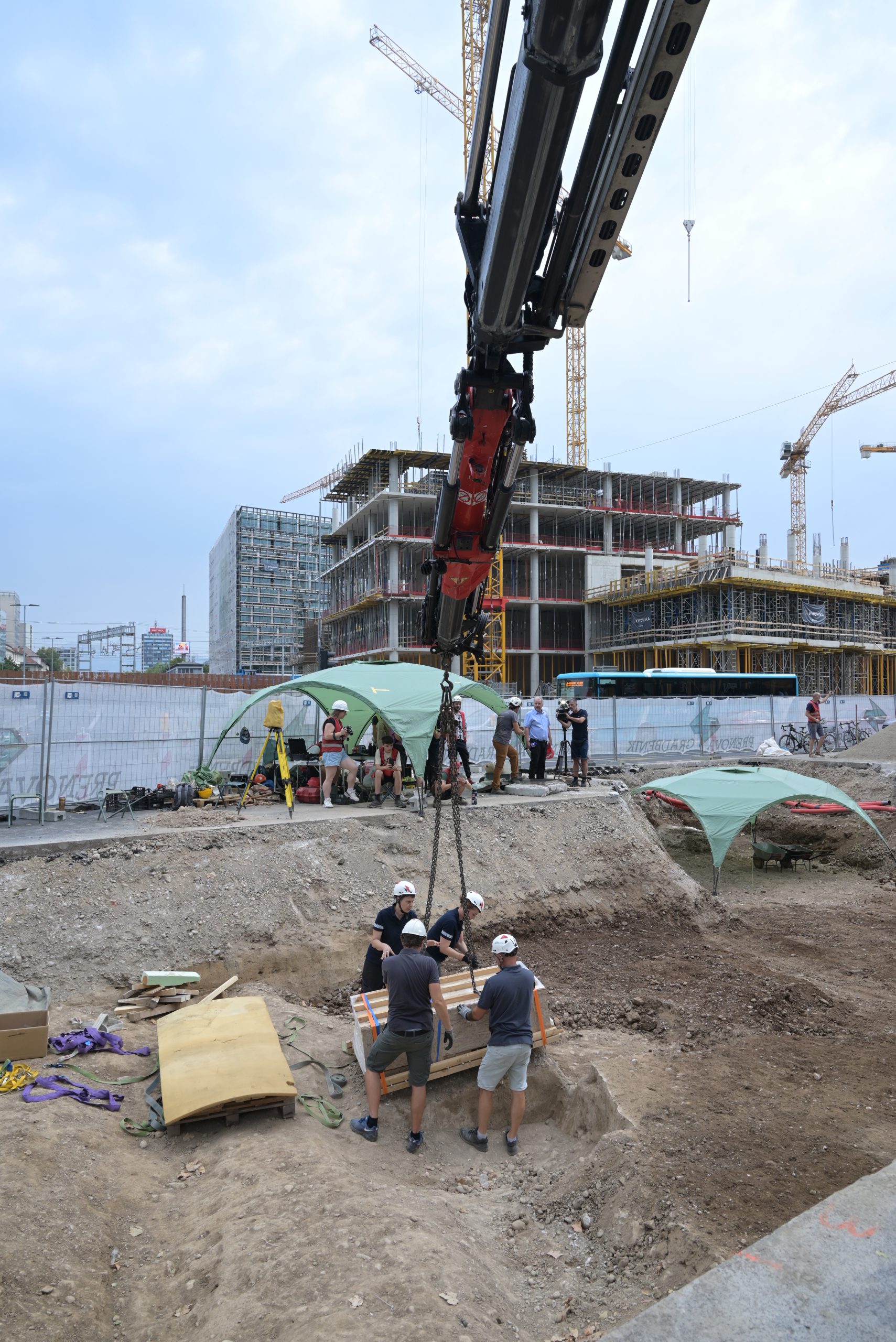
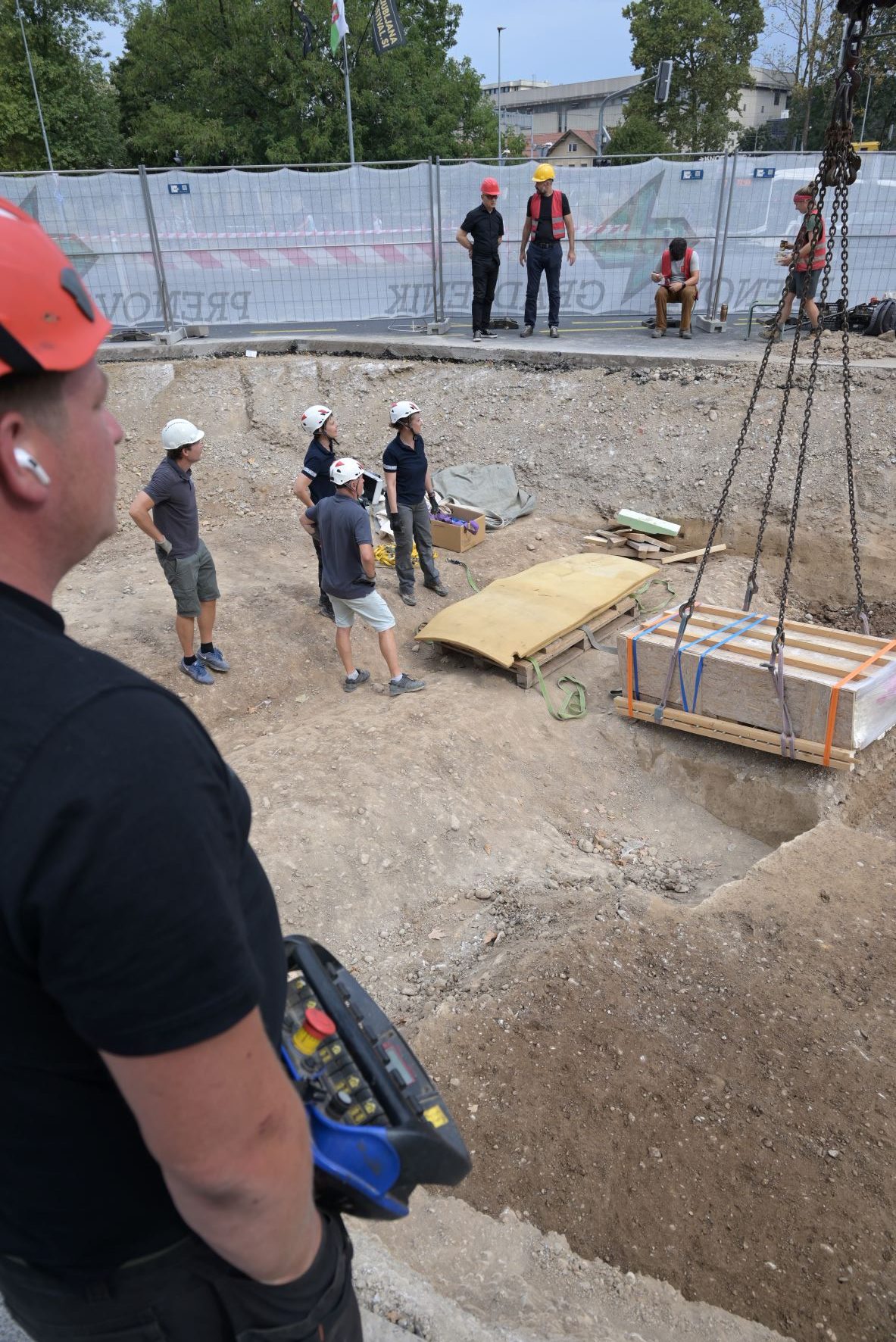
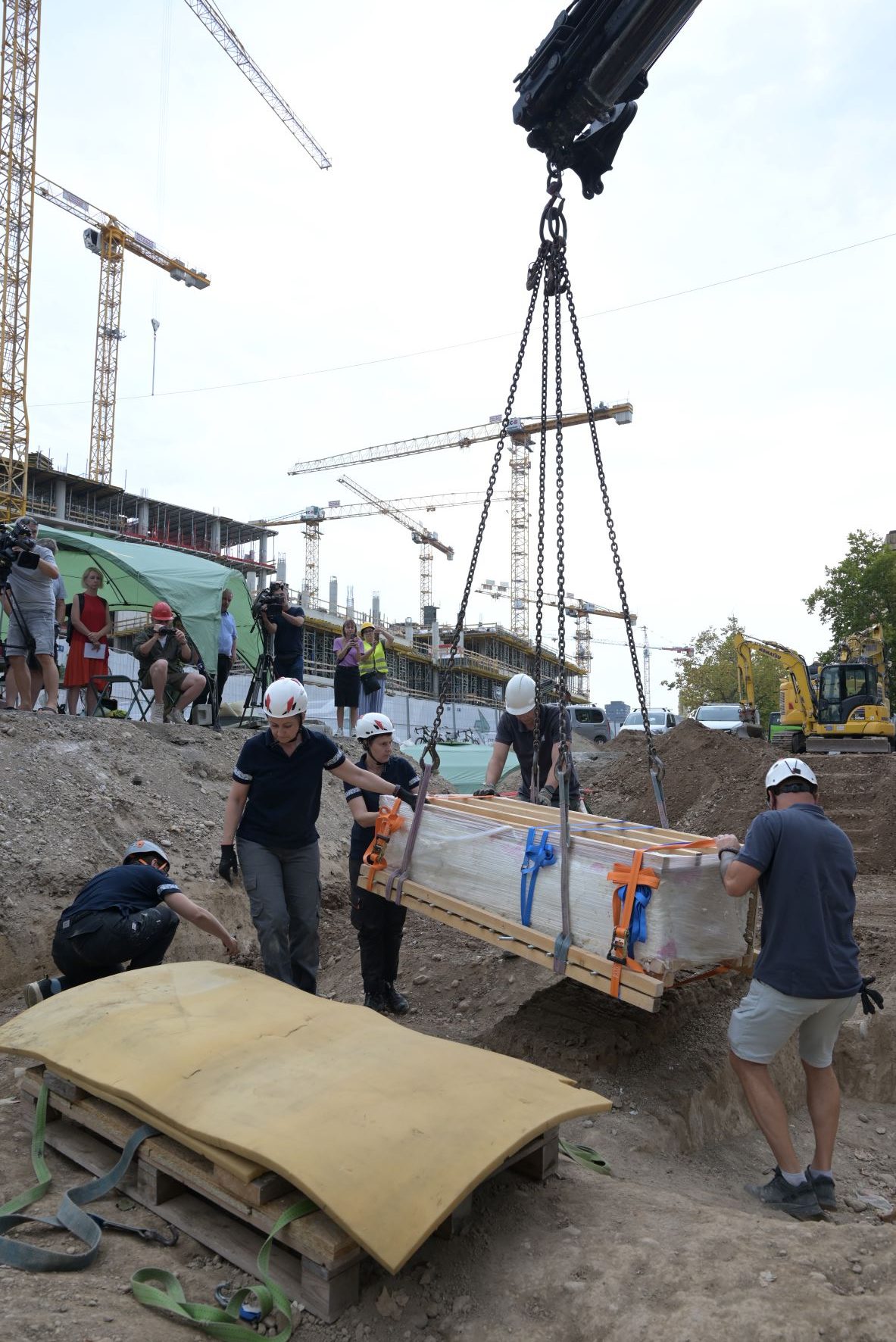
Before the lifting took place, we applied protection using a temporary fixator and a polyurethane foam cover, and installed supports under the headstone.
Given the cultural value of the object, its rarity, the quality of the workmanship, and its great research and presentation potential, experts have assessed that carrying out the conservation and restoration intervention is a priority task in the context of safeguarding and preserving the nationally important movable cultural heritage.
Conservation-restoration in situ and preparation for transport
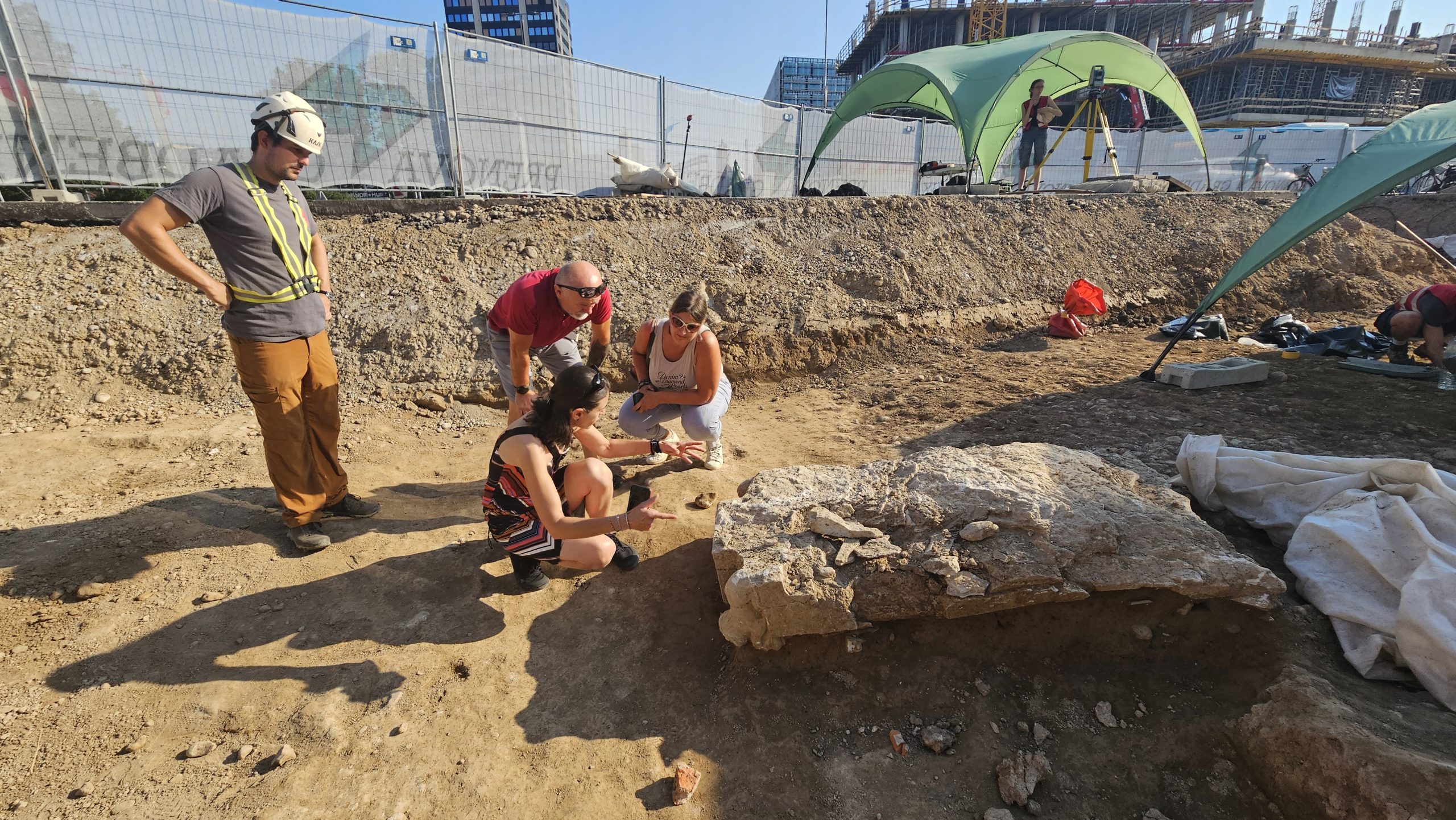
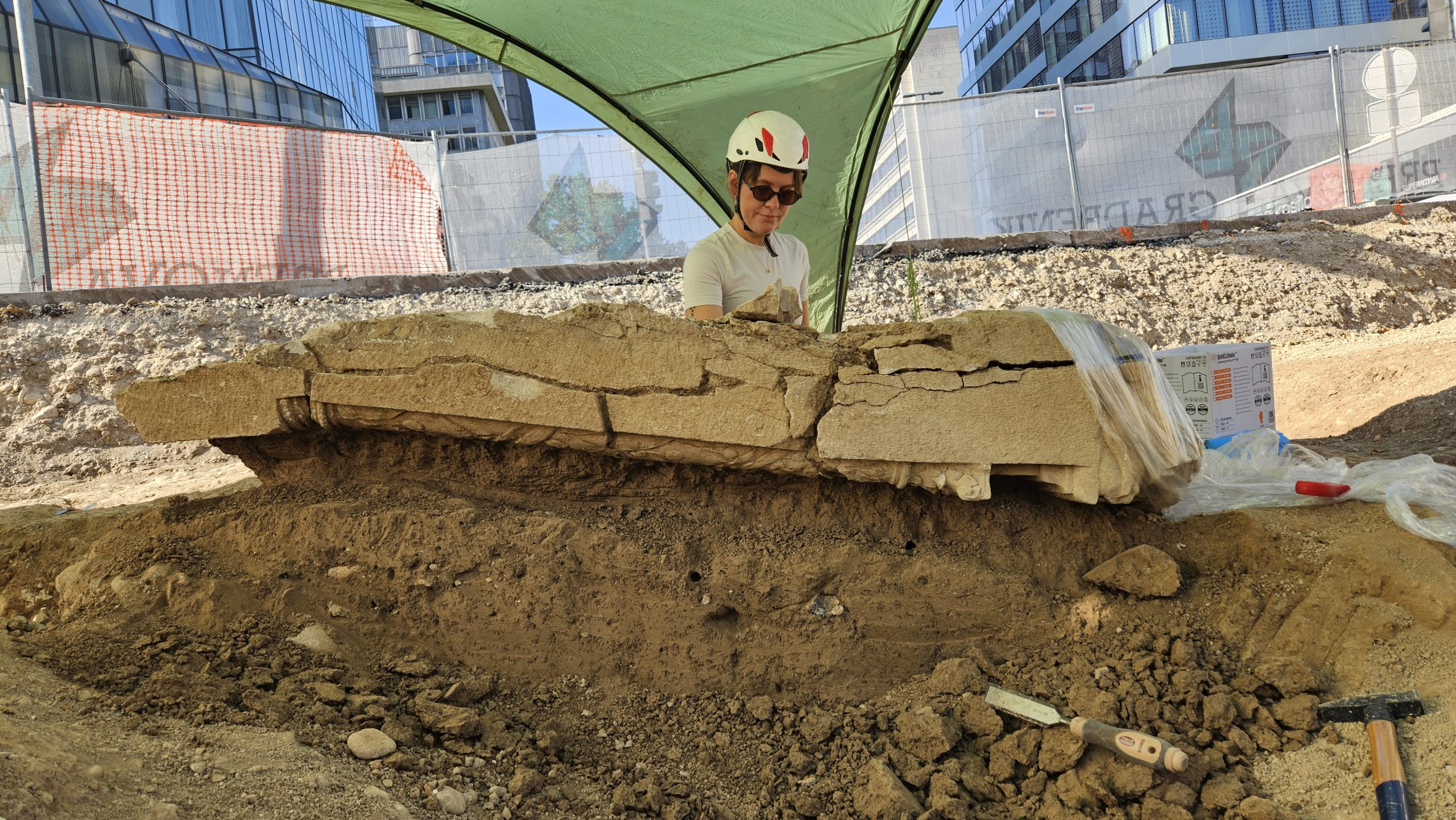
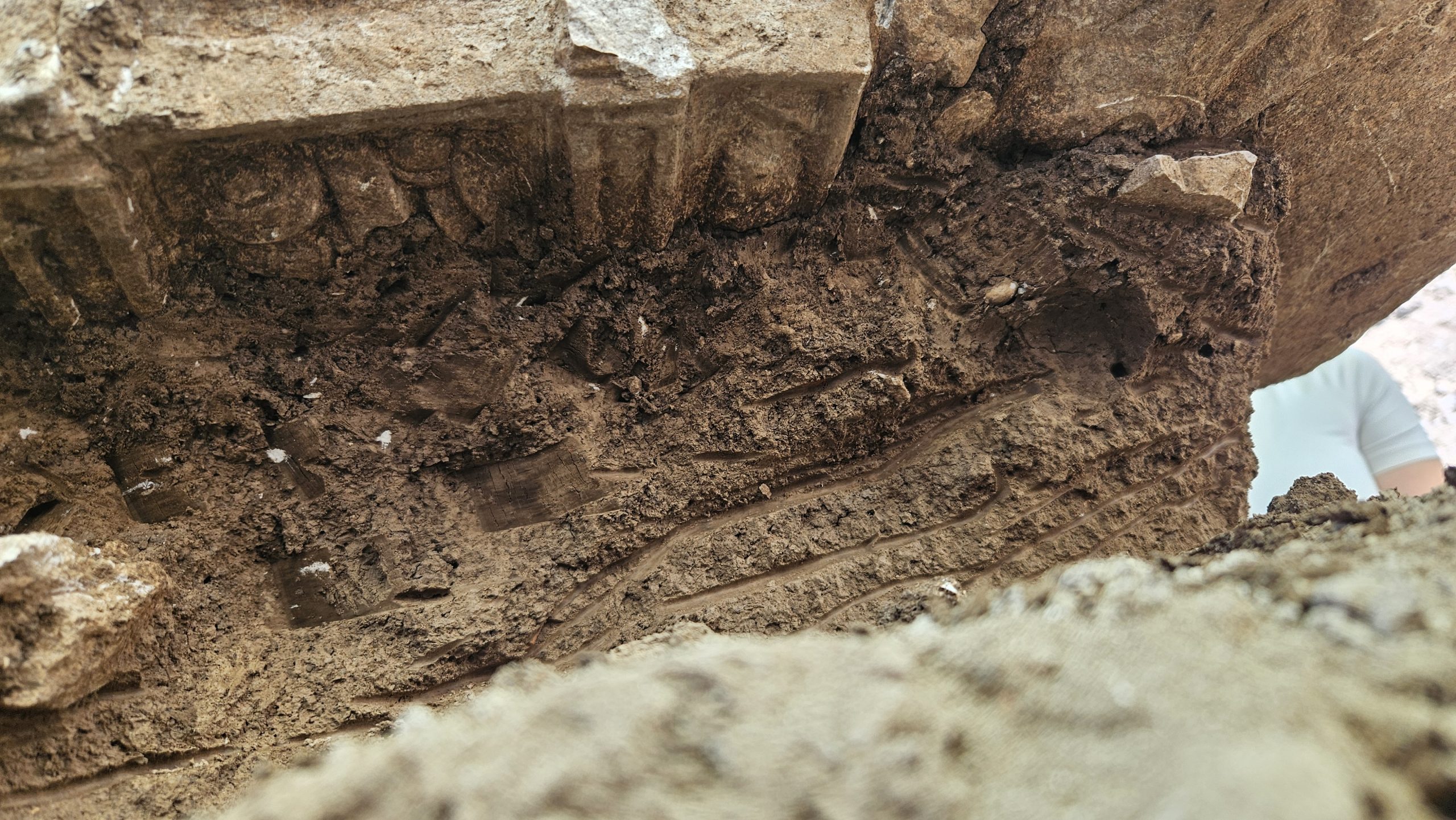
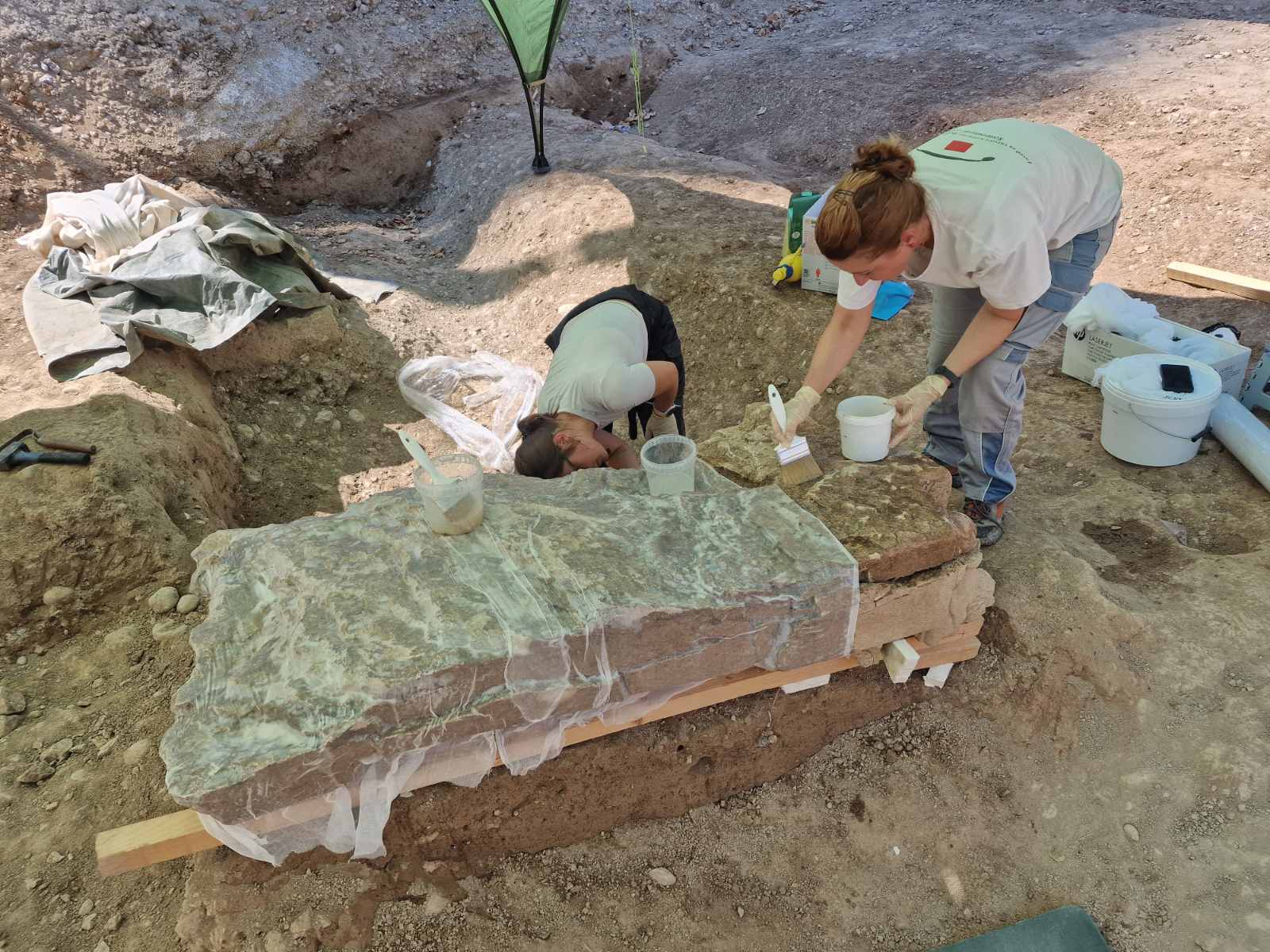
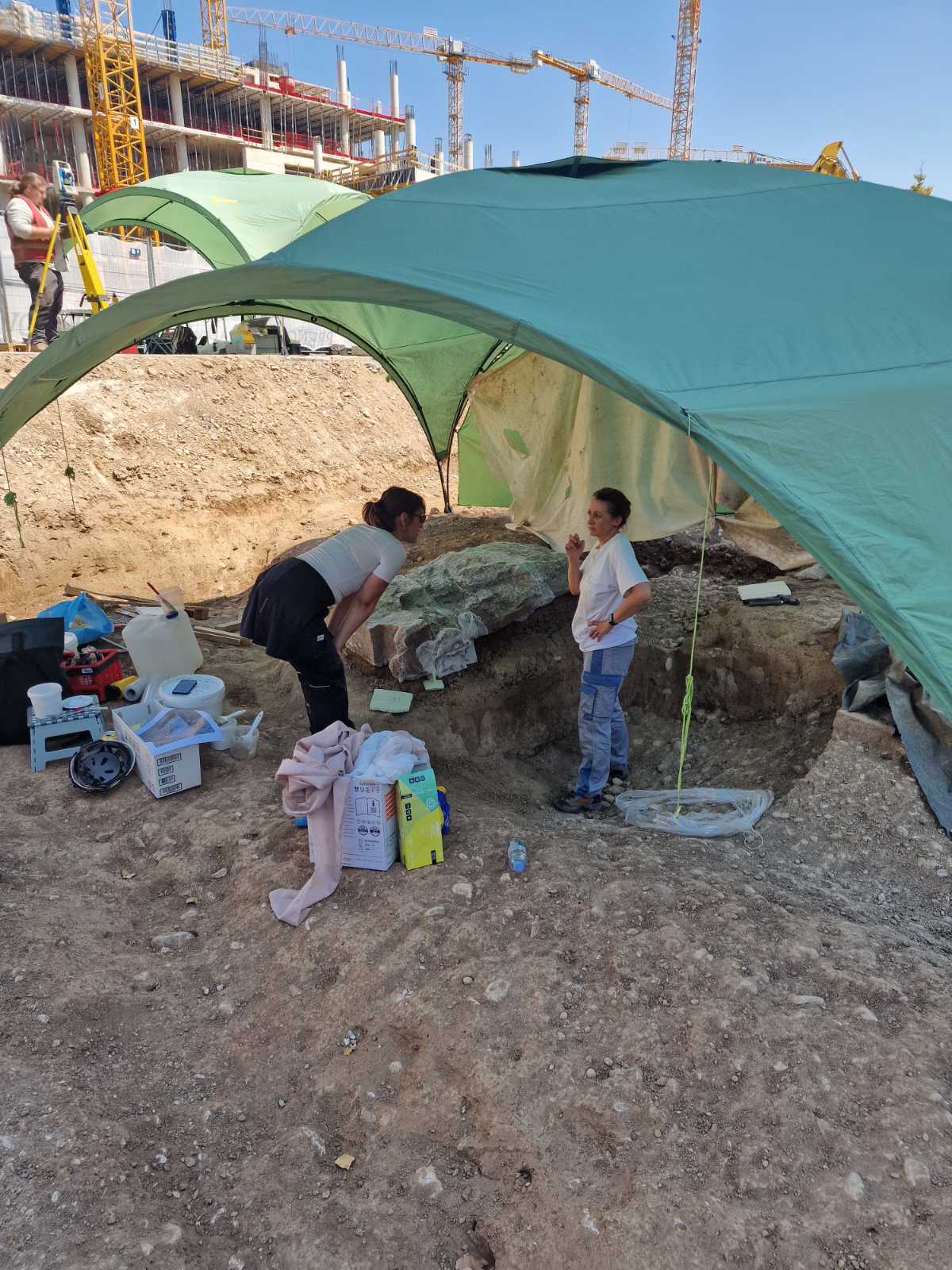
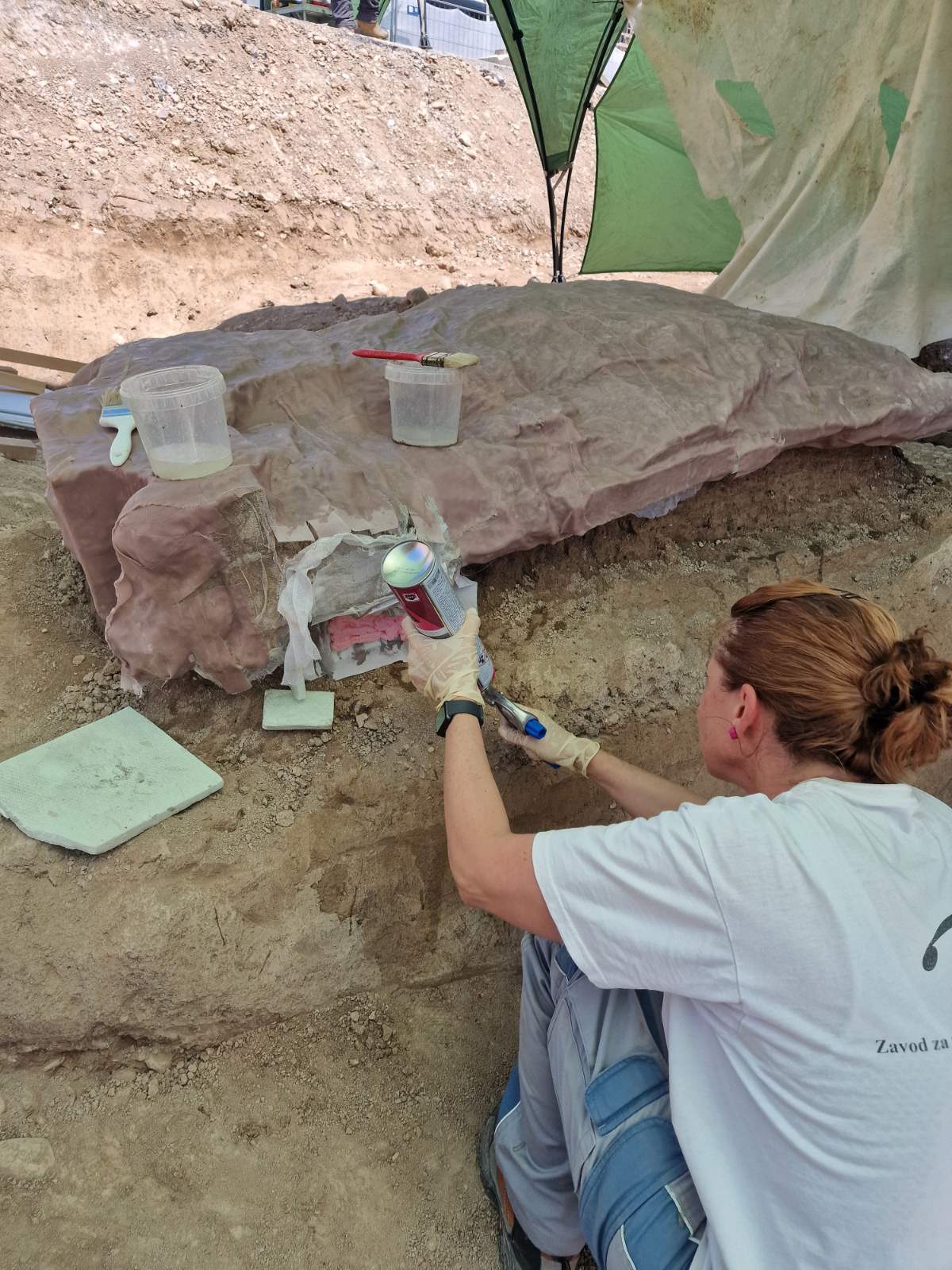
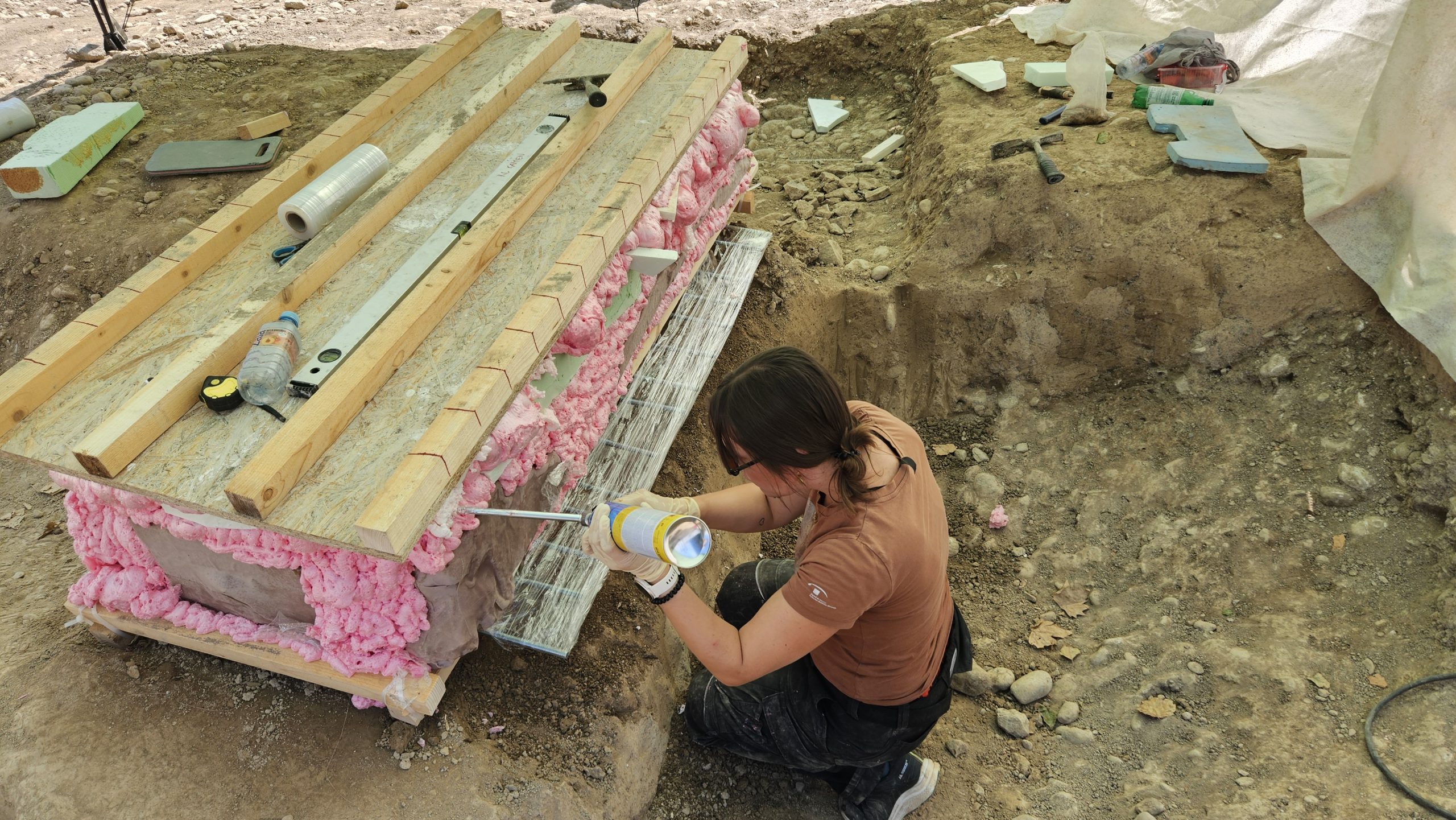
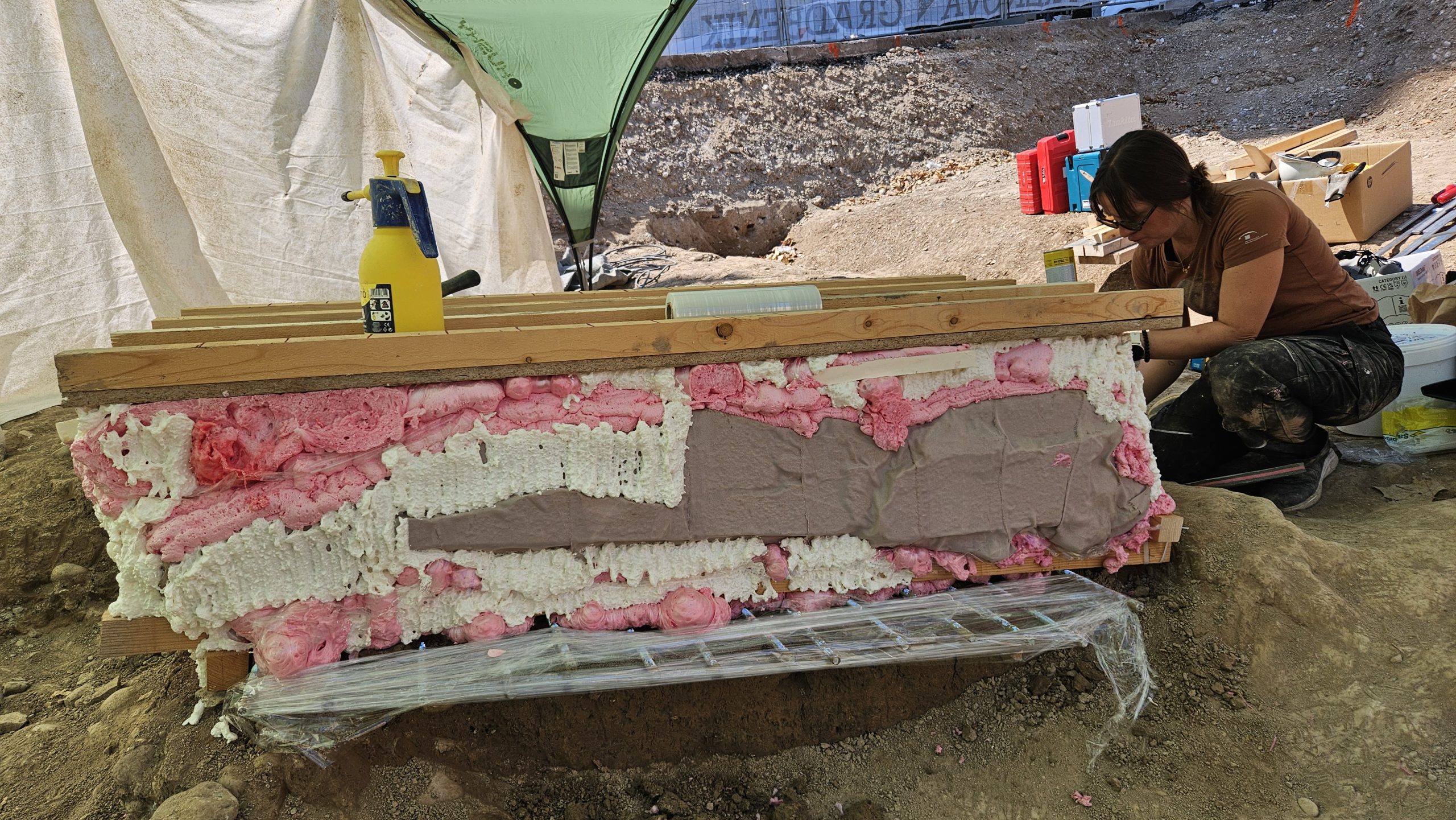
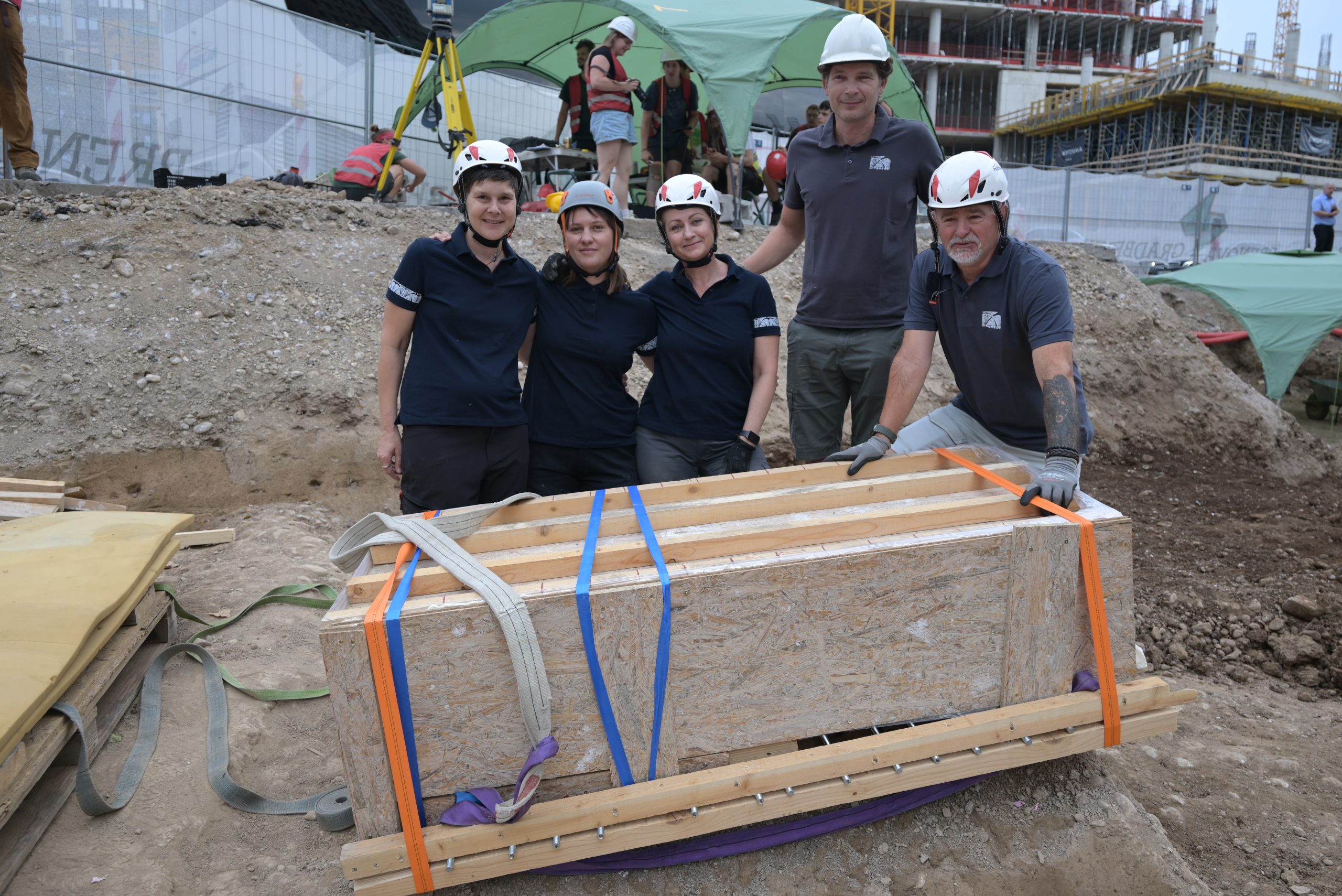
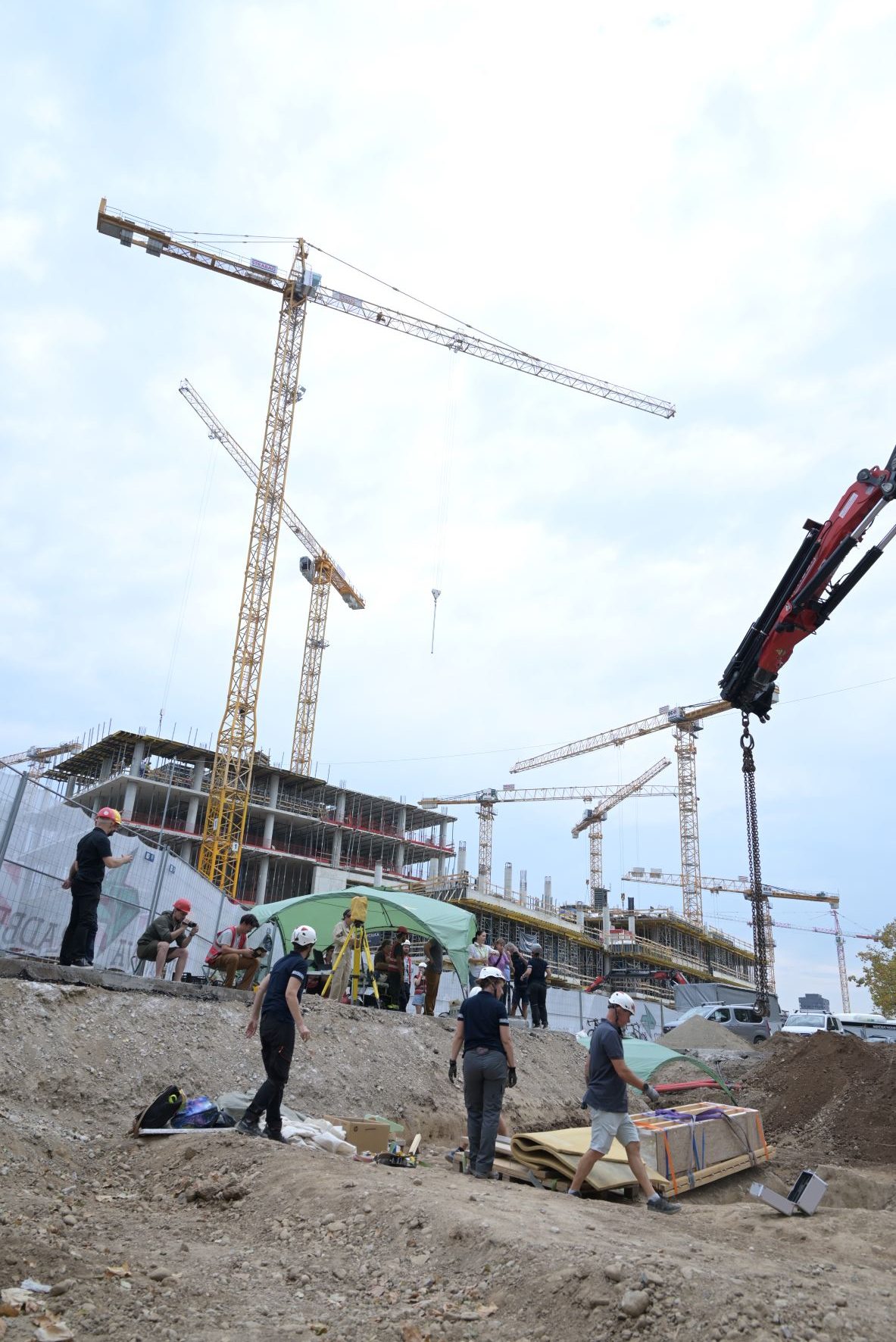
Raising the tombstone
Author of the photographs: Matic Perko, Stik Group
First cleaning and first findings
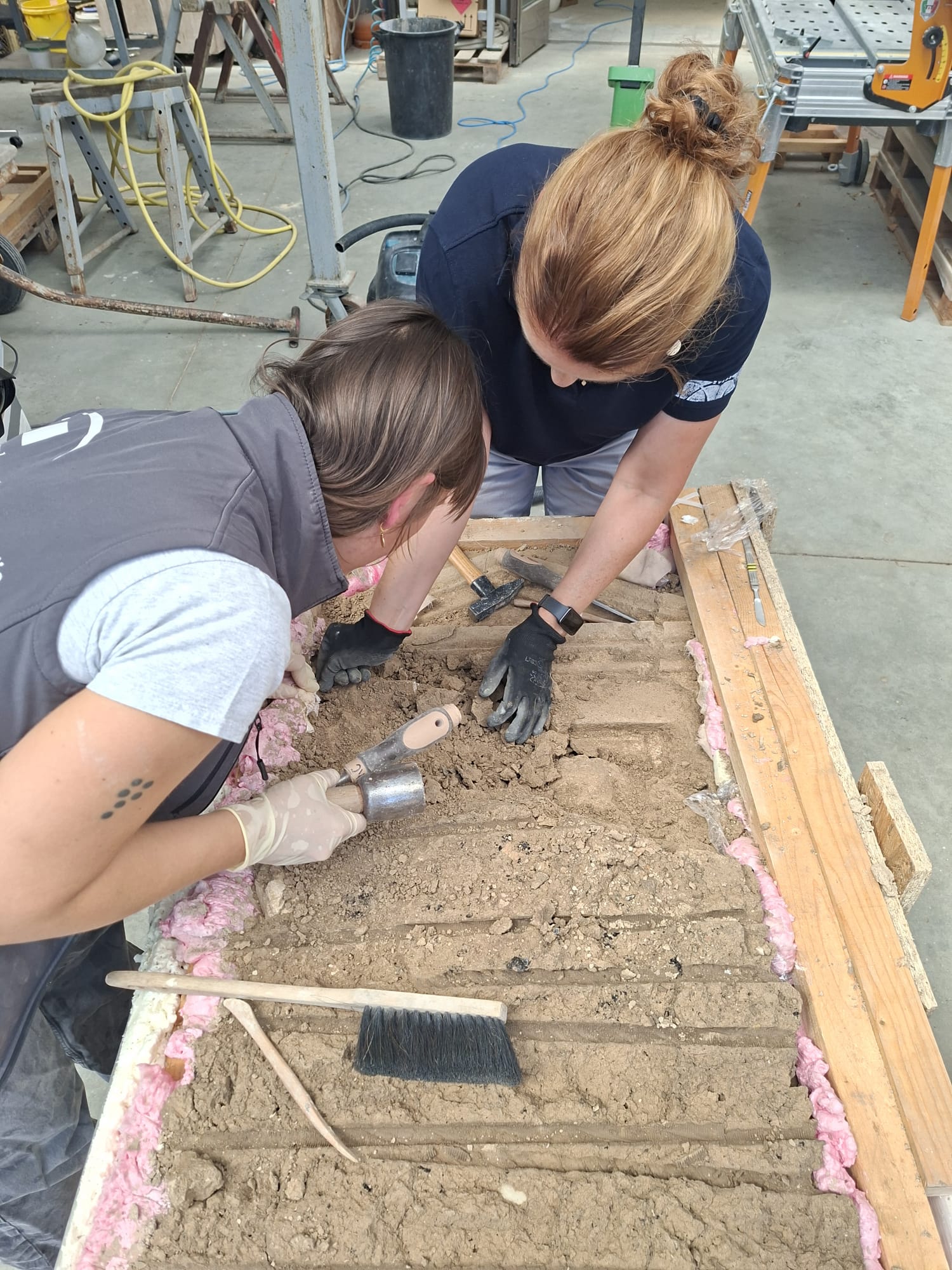
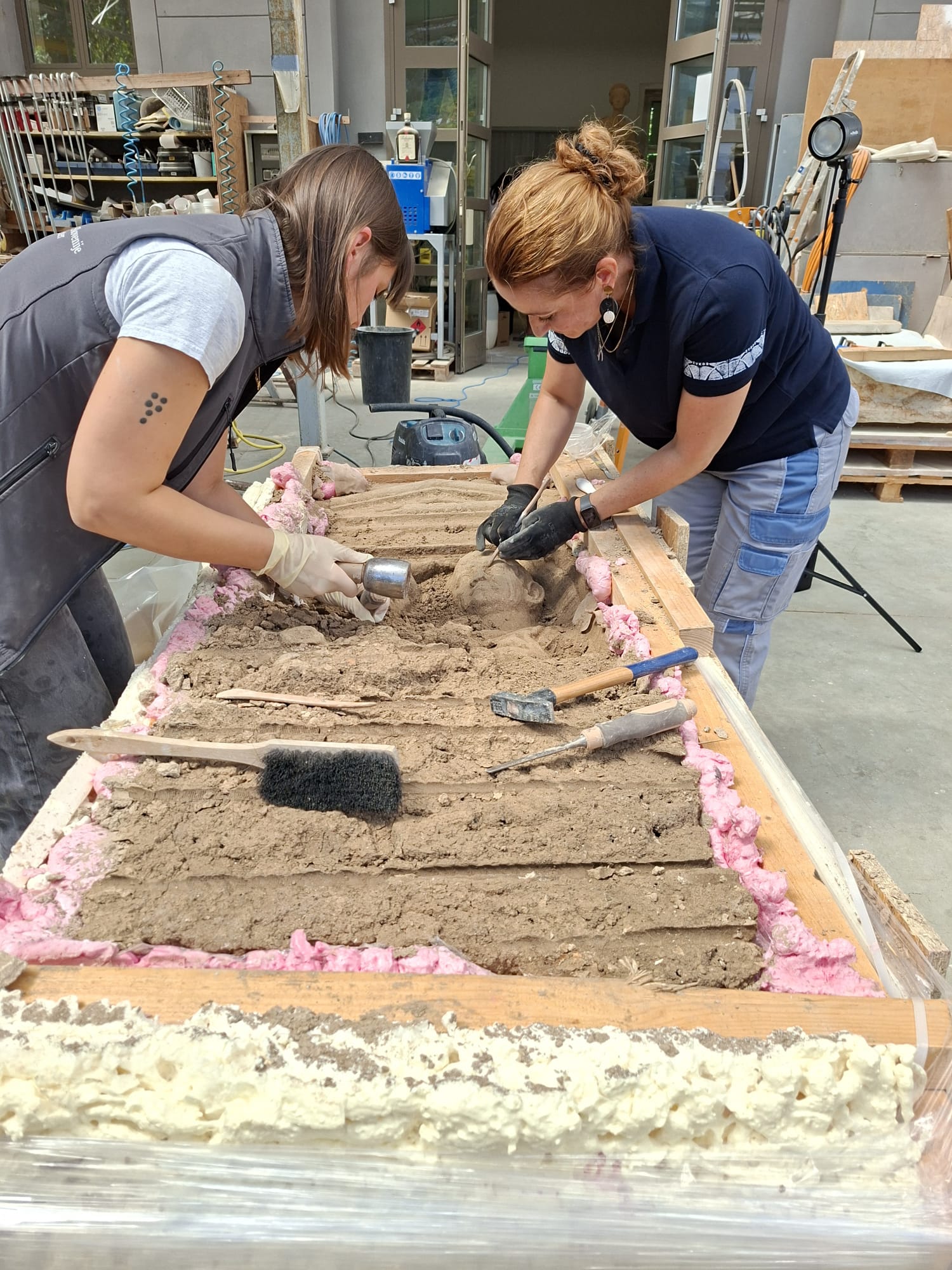
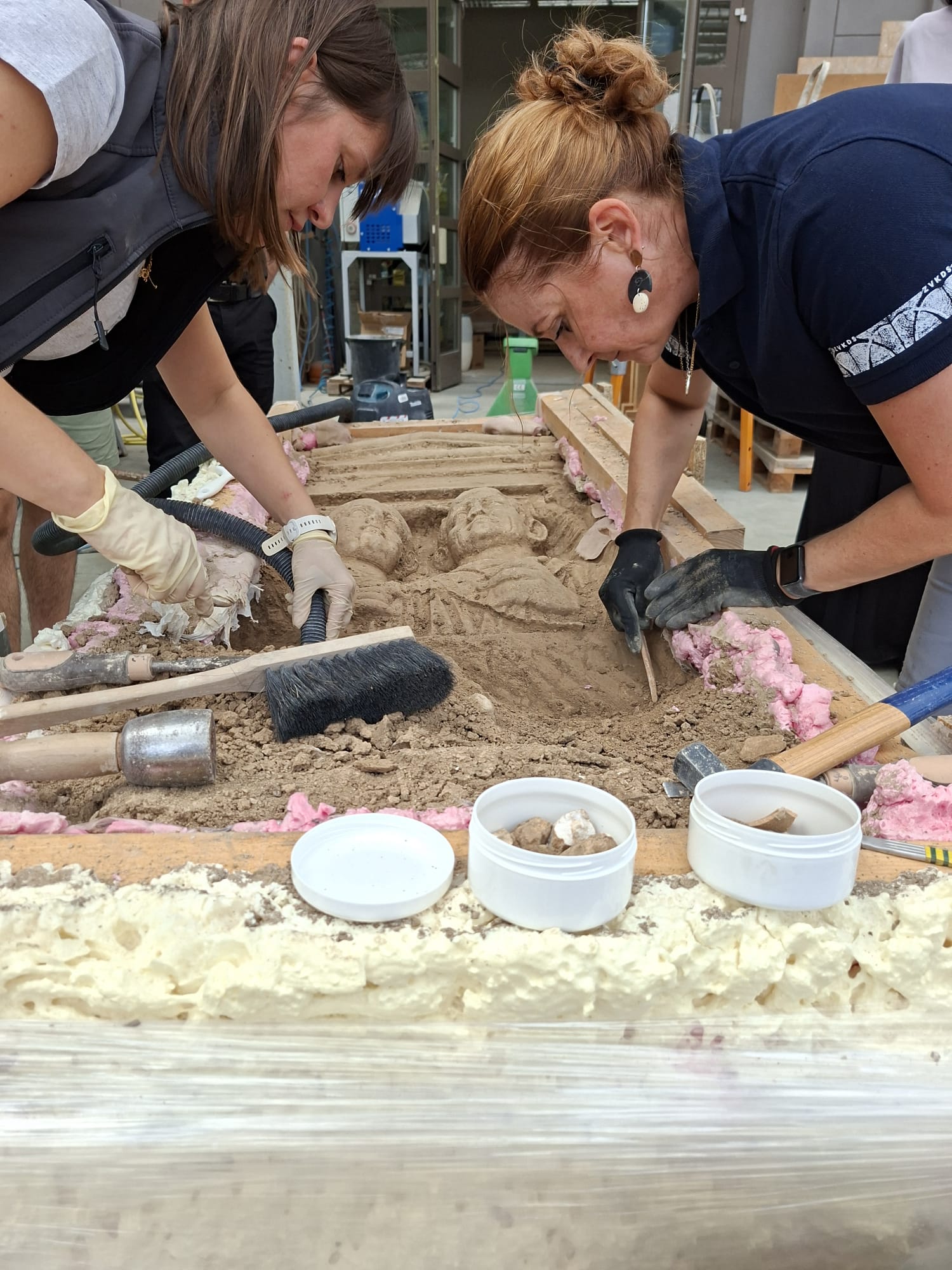
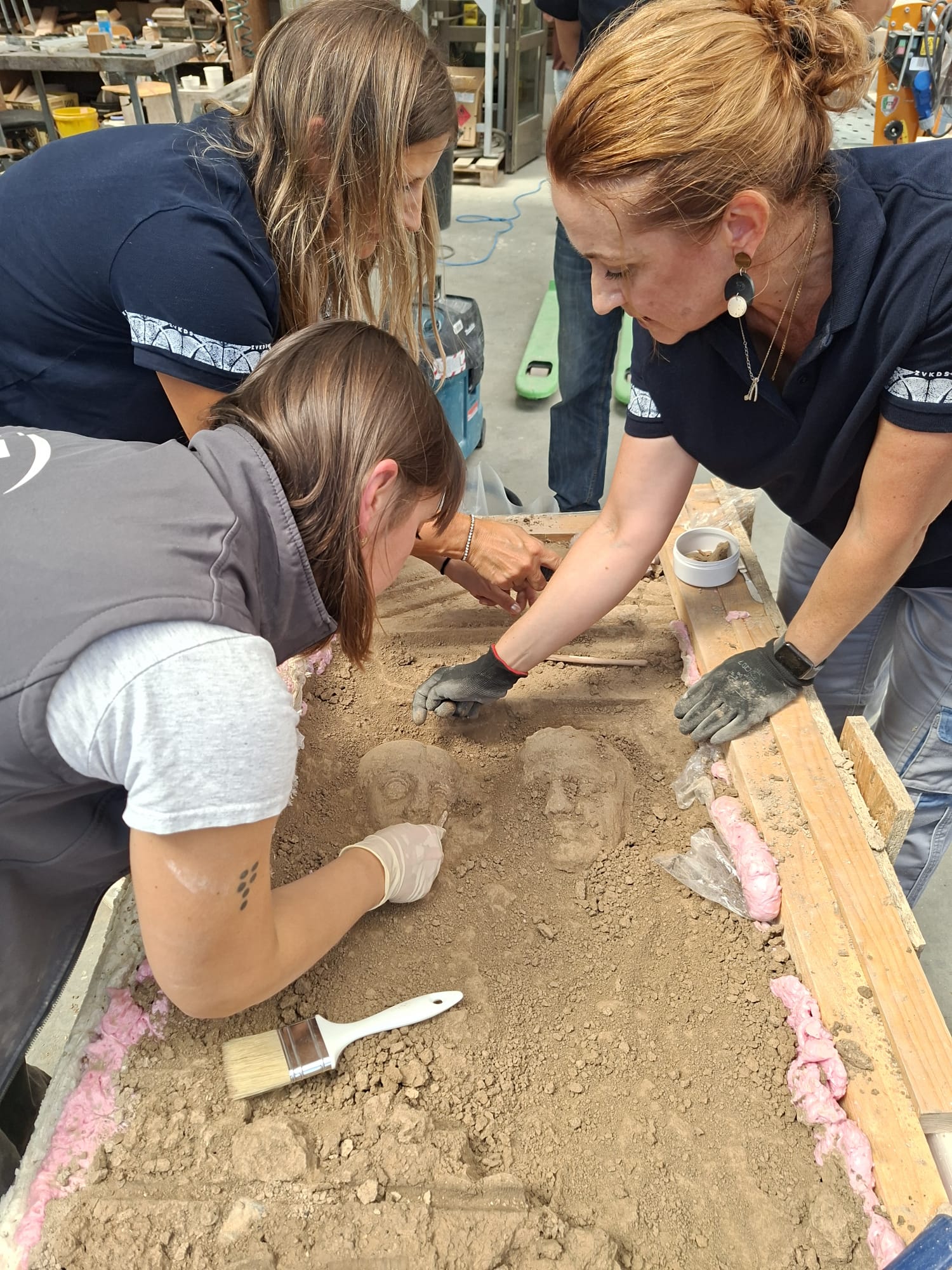
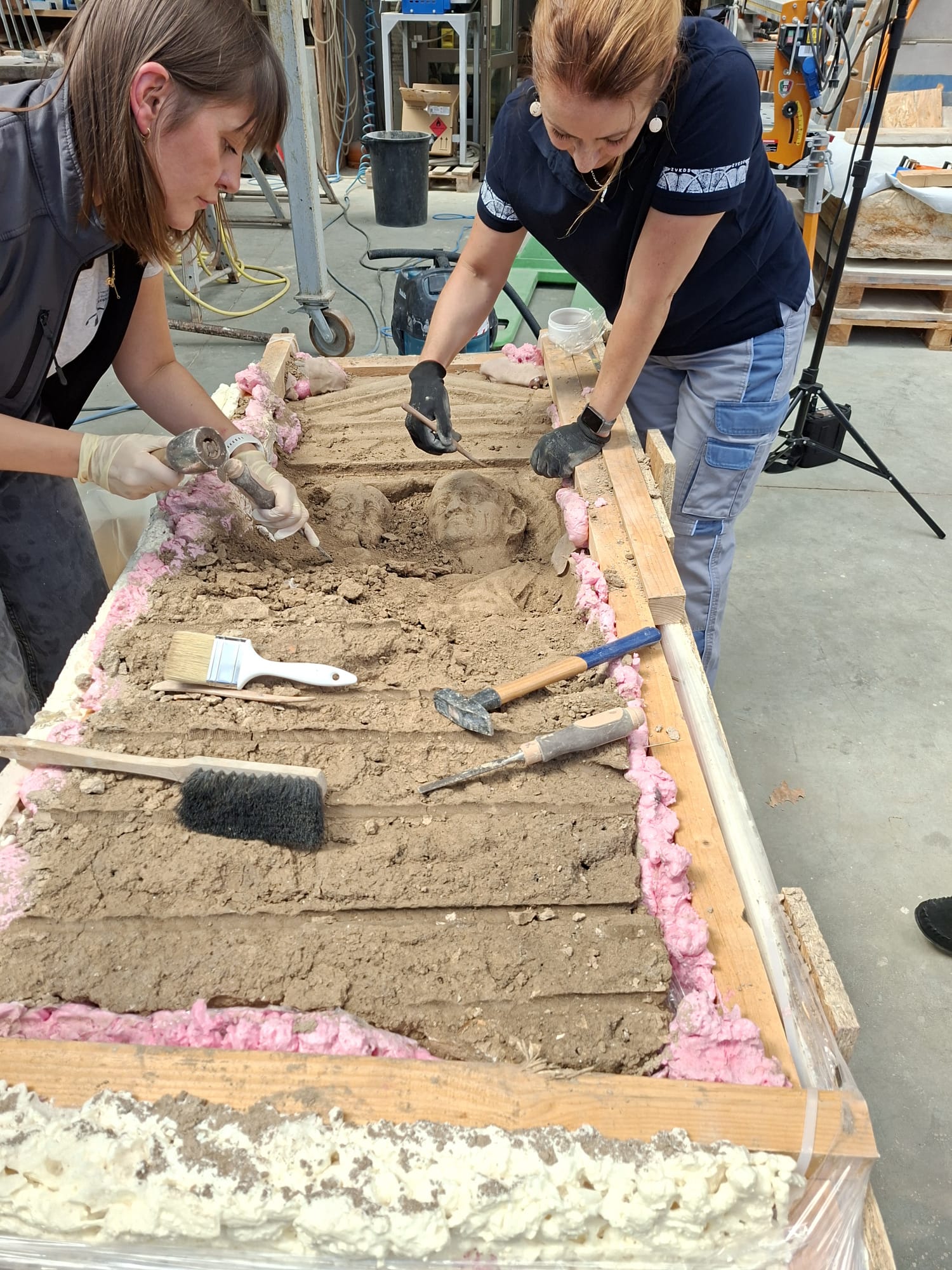
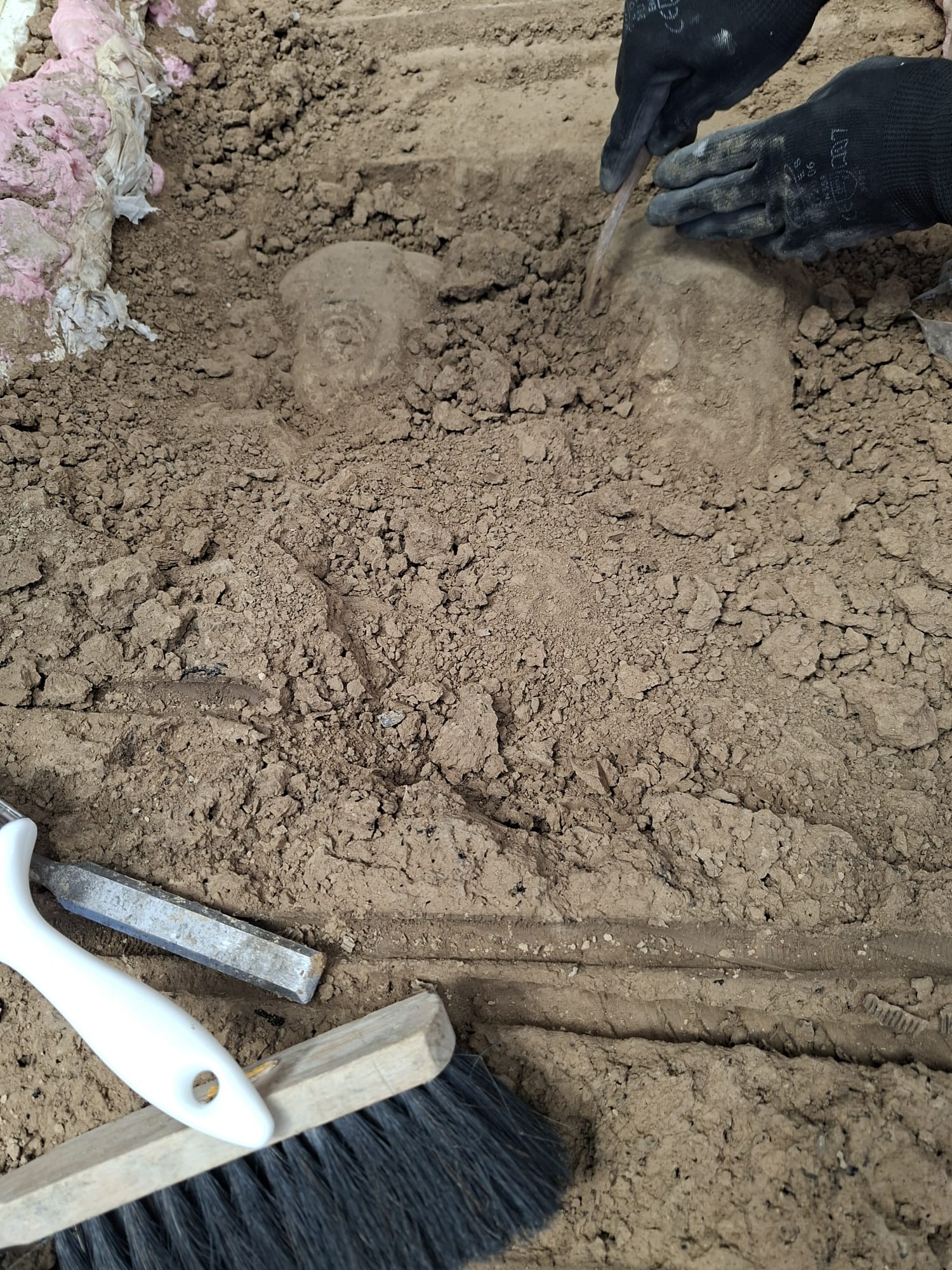
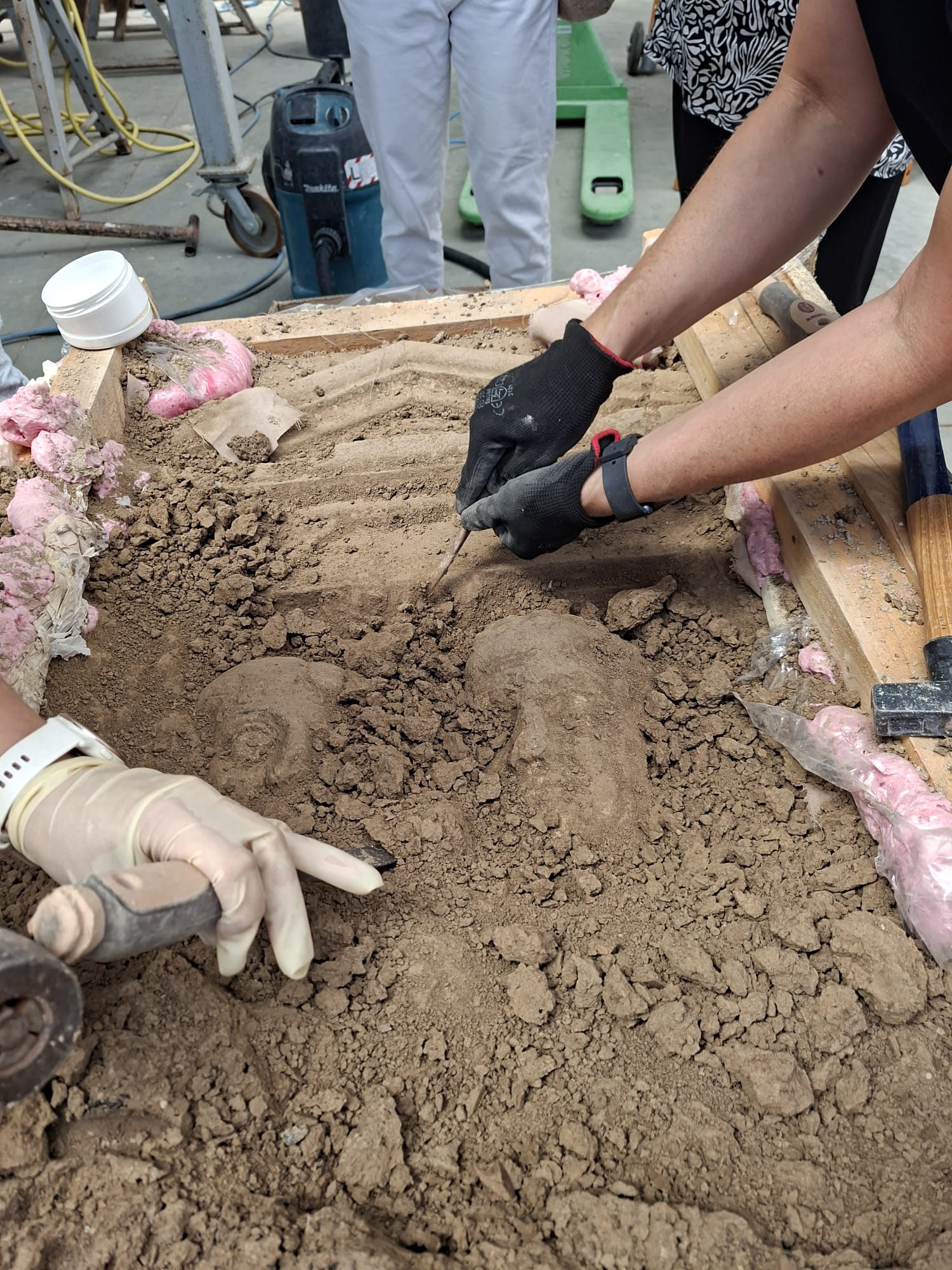
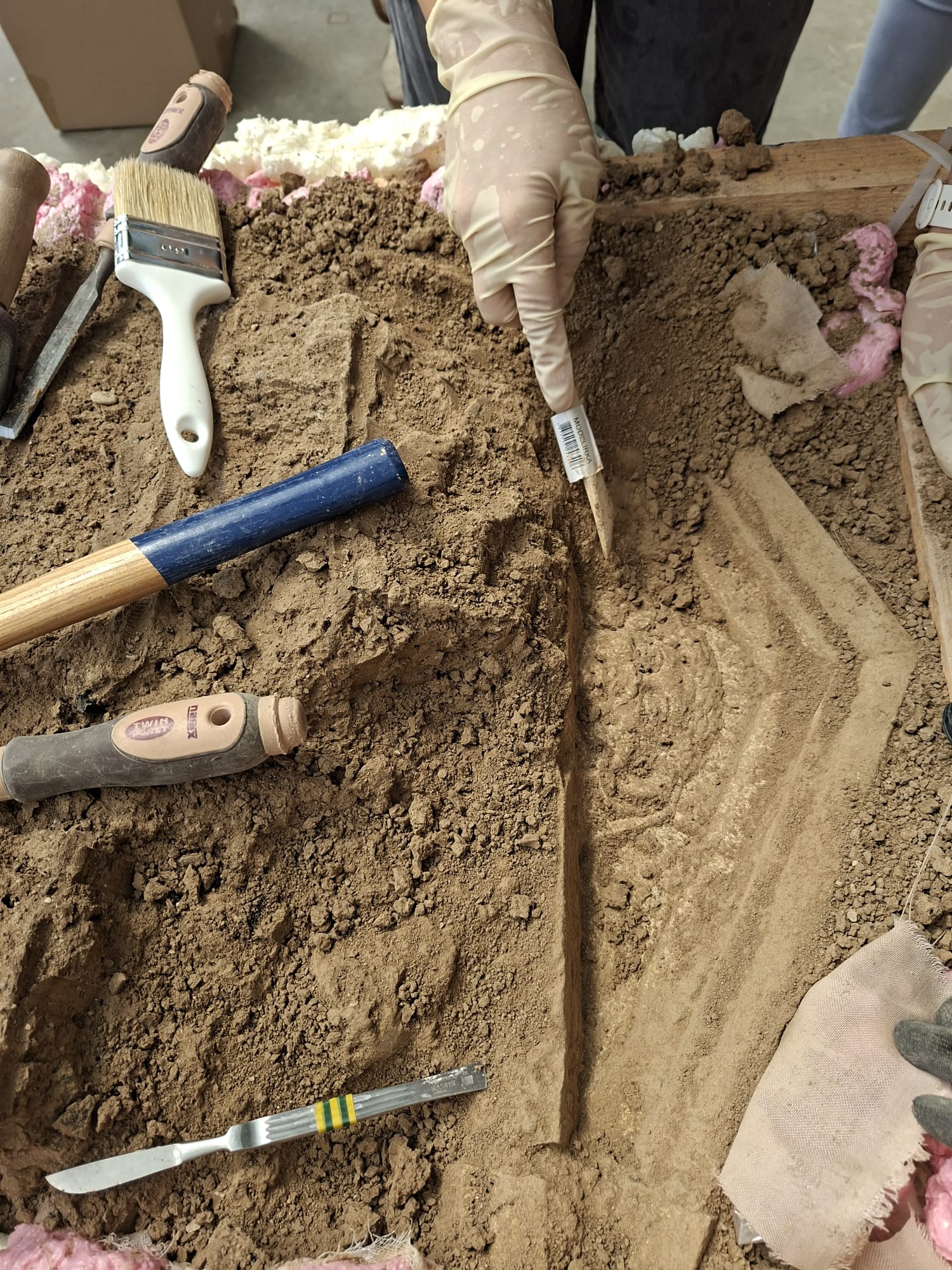
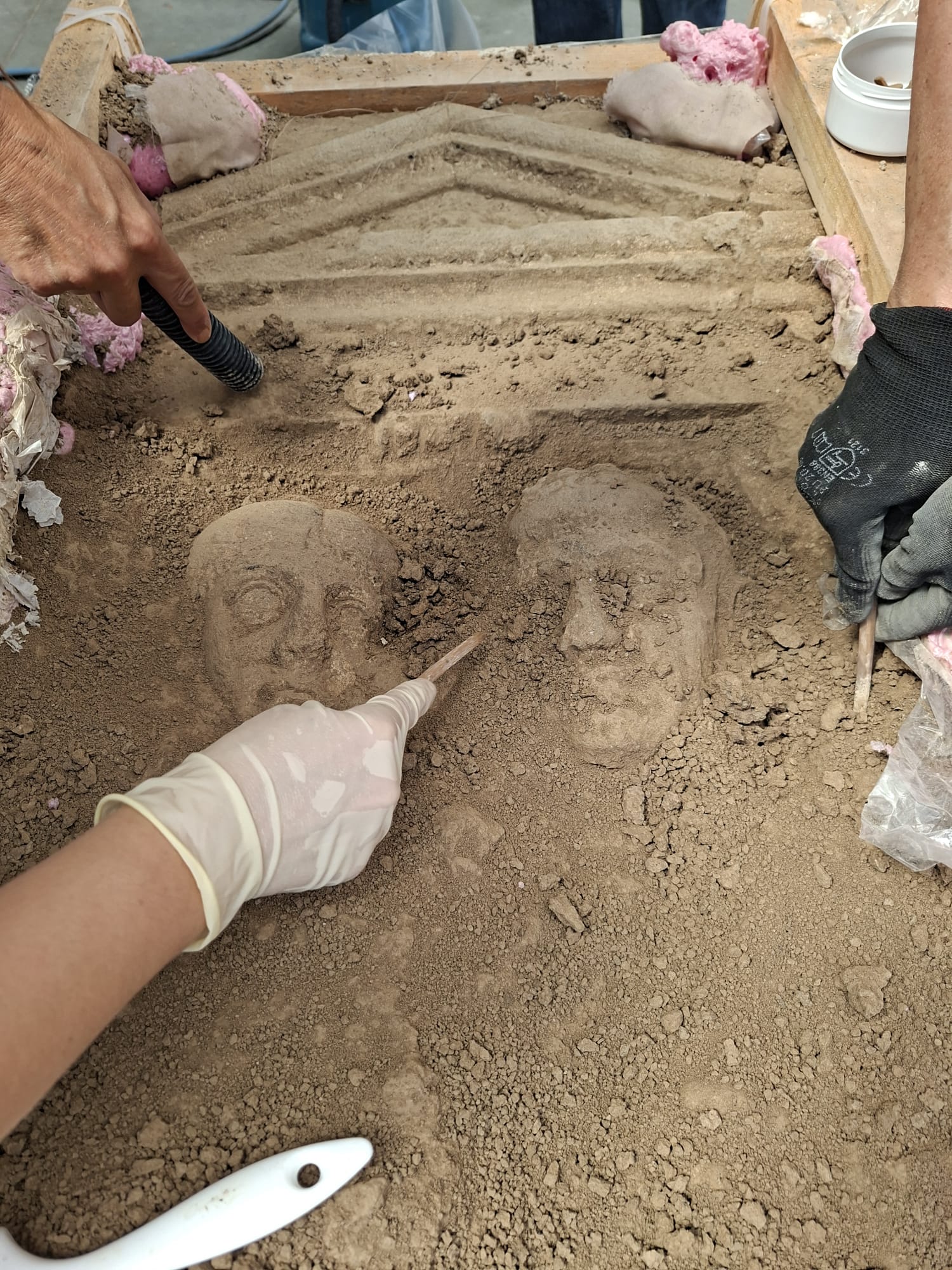
After being lifted from the discovery site, the tomb was transported to the Restorers’ Centre’s studio facilities. The entire structure was then turned over, so that the side facing upwards was exposed. The protective structure, consisting of wooden armature and metal threaded rods, was partially removed. The earth covering the tomb’s face was carefully and gradually removed, stored for archaeologists to examine further. The discovered relief will be further studied and interpreted by a group of experts, which will enable a more detailed understanding of its content, meaning, and possible historical circumstances of its creation.