Aptamer research of the early Middle Ages transition
Development of aptamer tests for revealing the transition from the ancient to the medieval period and for assessing the late Avar state after the unsuccessful siege of Constantinople
Ceramics and archaeological pottery are among the most numerous finds from excavations, as they reflect the cuisine, cooking methods, and socio-economic conditions in a given environment. By analyzing selected real archaeological samples from key Slovenian sites (including Pristava na Bledu, Ajdna nad Potoki, Gradišče nad Bašljem, and Malečnik), the project reveals the cultural context of food and allows for an accurate reconstruction of the diet and migration practices at the transition from antiquity to the Middle Ages.
Basic information
-
Title: Development of aptamer tests for revealing the transition from the ancient to the medieval period and for assessing the late Avar state after the unsuccessful siege of Constantinople
-
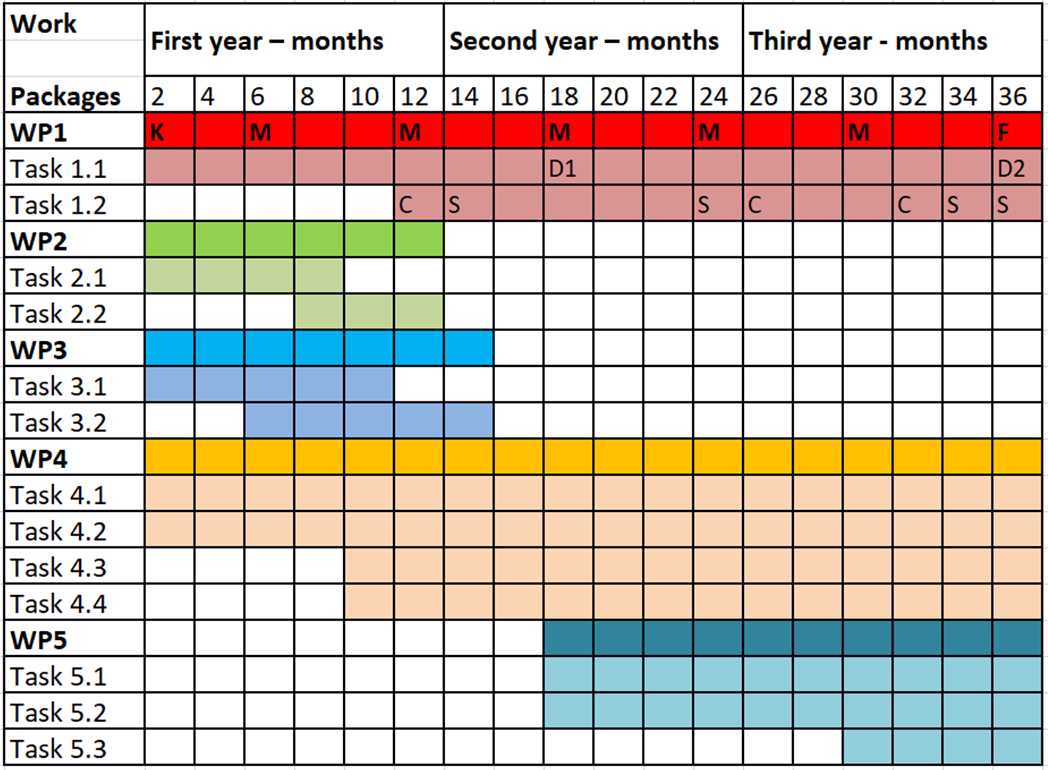
Duration: 36 months
-
Code: J6-70221
-
Registration-2025/232
-
Lead partner: Public institution of the Republic of Slovenia for the protection of cultural heritage (ZVKDS)
-
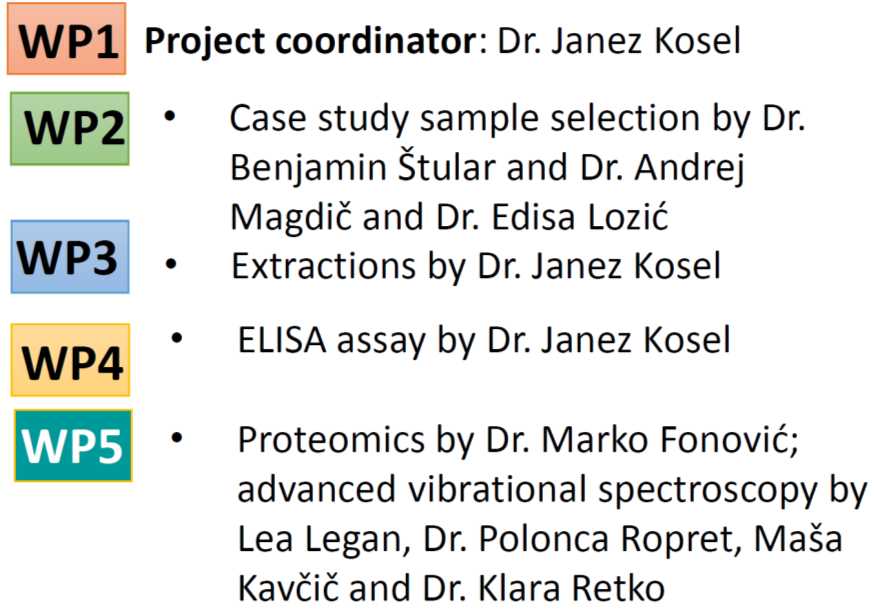
Project Manager: Janez Kosel, Ph. D. Dr. Janez Kosel
-
Financial resource: Public agency for scientific research and innovation activities of the Republic of Slovenia (ARIS)
Summary
In the last decade, archaeological interest in social aspects of food has increased significantly, especially in the context of cereal production. Studies focus on the links between nutrition, population migrations, changes in agricultural practices, and adaptations to environmental and social factors. Occasionally, dried or charred organic remains of food are preserved on archaeological ceramics, and their scientific analysis allows for the examination of key archaeological hypotheses related to nutrition. While methods for identifying animal ancient remains using immunological approaches are relatively well developed (the detection limit ≤ 1 ng), techniques for identifying plant ancient remains are relatively less advanced, mainly due to the small differentiation of macromolecules between closely related plant species or the lack of commercially available antibodies due to difficulties in their production or due to a low medical/pharmaceutical production interest. Our new approach will circumvent the limitations of immunological methods by developing an accessible ELISA test that will be based not only on antibodies but also on very specific, stable, reliable aptamers with strong in vitro activity, including those that will be specific for the detection of wheat, barley, and rye, and will be designed according to the SELEX method. Our test will be able to distinguish between archaeological traces of wheat, barley, and rye and will be used to address two key hypotheses that are the subject of intensive research in European archaeology of the late Antiquity and early Middle Ages: (1) the transition period from Antiquity to the Middle Ages, where it was found that the staple food of the early Middle Ages was barley/wheat and not wheat; and (2) the Avar “agricultural revolution”, which, before the siege of Constantinople in 626 AD, accelerated the introduction of wheat in the region. In addition to cereals, our new ELISA test will also enable the detection of various other types of food (legumes, nuts, dairy products, meat, eggs, beef broth, bloodworms, and fish), which will provide valuable additional data for verifying these hypotheses. This breakthrough will stimulate new interdisciplinary research in the humanities and natural sciences by providing specific tools based on aptamers (target 1 and 3 of the European Research Infrastructure for Heritage Science, E-RIHS), which will have a significant impact on archaeological methodology in the medium term. The direct projection of the results on our archaeological samples will be crucial for understanding the origins of the early Middle Ages, which has a pan-European significance, especially for Slovenia, as it will contribute to understanding the comprehensive cultural shift often referred to as Slavization. Furthermore, the project will improve the scientific basis for sustainable management, in line with the United Nations Agenda 2030, Goal 17, Targets 17.6 and 17.8, by promoting better collaboration between natural and social scientists. Moreover, the advanced characterization techniques proposed in this project have the potential for application in medicine and diagnostics, forensics, and quality assurance in the food industry.
Objectives
The general goal of the research is to introduce a new research model that will combine systematic construction of an inventory database with the most advanced biochemical analysis of target molecules in organic residues found on ceramics to confirm two key archaeological hypotheses (the transition from antiquity to the Middle Ages and the agrarian revolution). The ultimate practical goal is the development of a biochemical ELISA test based on reliable aptamers and antibodies that will be independent of expensive measurement equipment and will enable differentiation between archaeological traces of wheat, barley, and rye. The test will be affordable for smaller research institutions and museums.
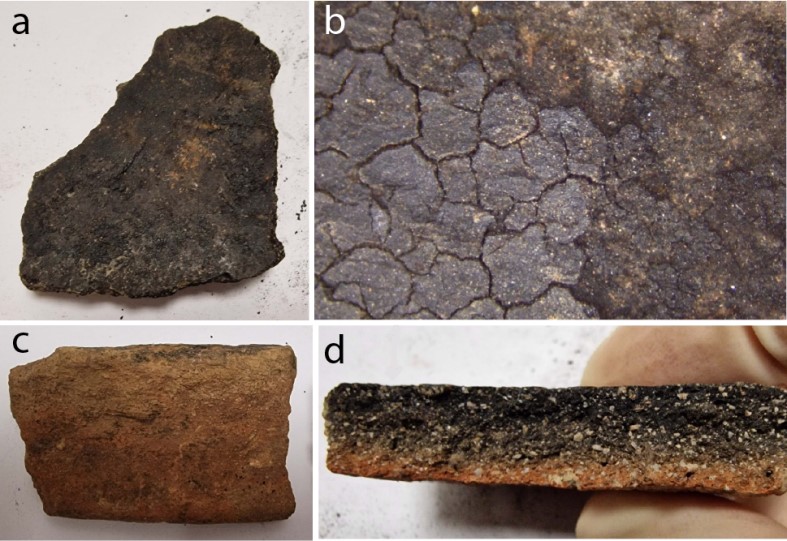
Figure 1: Example of archaeological pottery from the Pristava site in Bled, Slovenia; a) fragments of pottery; b) charred organic remains on the fragments of pottery in Figure a; c) and d) fragments in cross-section.
Detailed objectives
- Archaeological, anthropological and material contextualization of patterns: Systematic analysis and enrichment of the inventory database for the entire collection of study ceramic finds from selected sites (Pristava na Bledu, Ajdna nad Potokom, Gradišče nad Bašljem, Malečnik, Slivnica, Maribor – Zgornje Radvanje, Spodnja Gorica) with the inclusion of FTIR and XRF spectral analysis data (DS2).
- Optimization and evaluation of protein extraction: Evaluation and improvement of extraction procedures of proteins from ceramic complexes by comparing milder and more aggressive methods on model and real archaeological samples, and verifying potential damage to protein structures (DS3).
- Design and development of the ELISA test for the analysis of the presence of cereals: The development of a specific test for the detection of wheat, barley and spelt using existing antibodies, published aptamers, and newly developed aptamers for spelt (DS4).
- Extension of the ELISA test to other food types: Integration of existing antibodies and aptamers for the detection of a wider range of foods (legumes, nuts, dairy products, meat, eggs, soups, bloodworms, fish) in ceramic dishes (DS4).
- Proteomic sequencing and spectroscopic characterization: Comprehensive proteomic analysis (LC-MS/MS) and FTIR/Raman spectroscopy of selected key samples for the identification of ancient proteins, the determination of their origin and the assessment of their degradation/aging rate, and final archaeological interpretation (DS5).
Work packages and timing
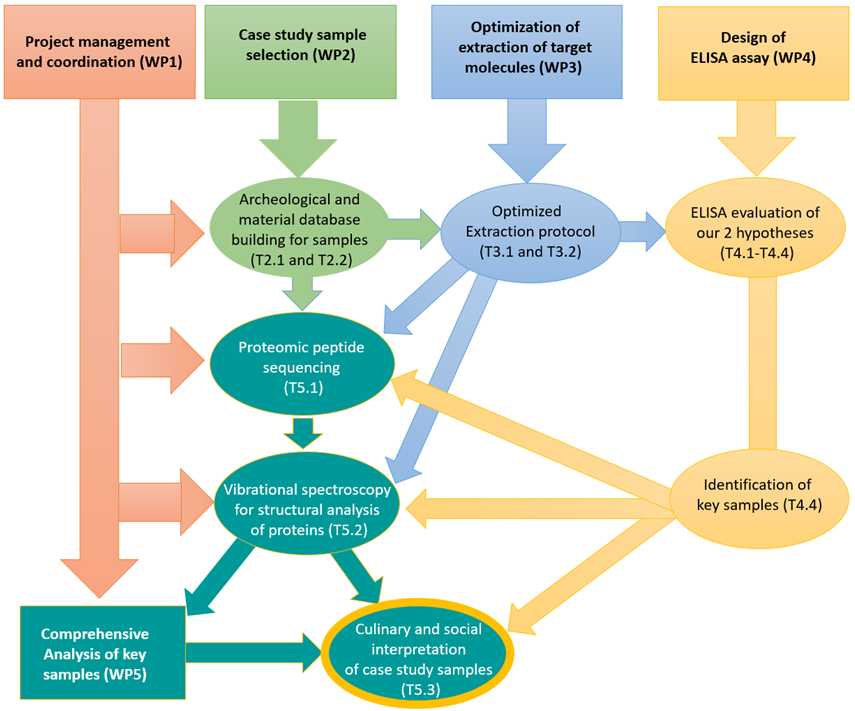
- Work package 1: Project management, coordination and dissemination
- Task 1.1: Operational management, project monitoring, and preparation of interim and final reports.
- Task 1.2: Dissemination of results in scientific journals and presentations at international conferences.
- Work package 2: Archaeological, anthropological and material contextualization of archaeological ceramic finds for the production of an inventory database
- Task 2.1: Selection and acquisition of ceramic samples from selected archaeological sites, and analysis of field documentation.
- Task 2.2: Development of a structured inventory database and execution of material spectroscopic analyses (FTIR and XRF).
- Work package 3: Optimization of protein extraction from ceramic complexes
- Task 3.1: Optimization of the protocol for the extraction of target molecules and comparison of the efficiency of aggressive solvents and milder buffers.
- Task 3.2: Validation of extraction procedures using the analysis of total proteins
- Working set 4: Design of the ELISA test
- Task 4.1: The design of the ELISA test for differentiating organic traces of wheat, barley and grass.
- Task 4.2: Design of the ELISA test for the determination of other types of food (meat, milk, fish, eggs, legumes, nuts).
- Task 4.3: ELISA antibody-based test application on real archaeological samples.
- Task 4.4: Apparatus for the ELISA test based on aptamers on real archaeological samples.
- Work package 5: Comprehensive analysis of key archaeological study samples
- Task 5.1: Proteomic sequencing of ancient proteins using advanced mass spectrometry.
- Task 5.2: Spectral analysis of secondary structures of ancient proteins using FTIR and Raman microscopy.
- Task 5.3: Integration of biochemical, proteomic and material data, and the final archaeological interpretation of early medieval finds.