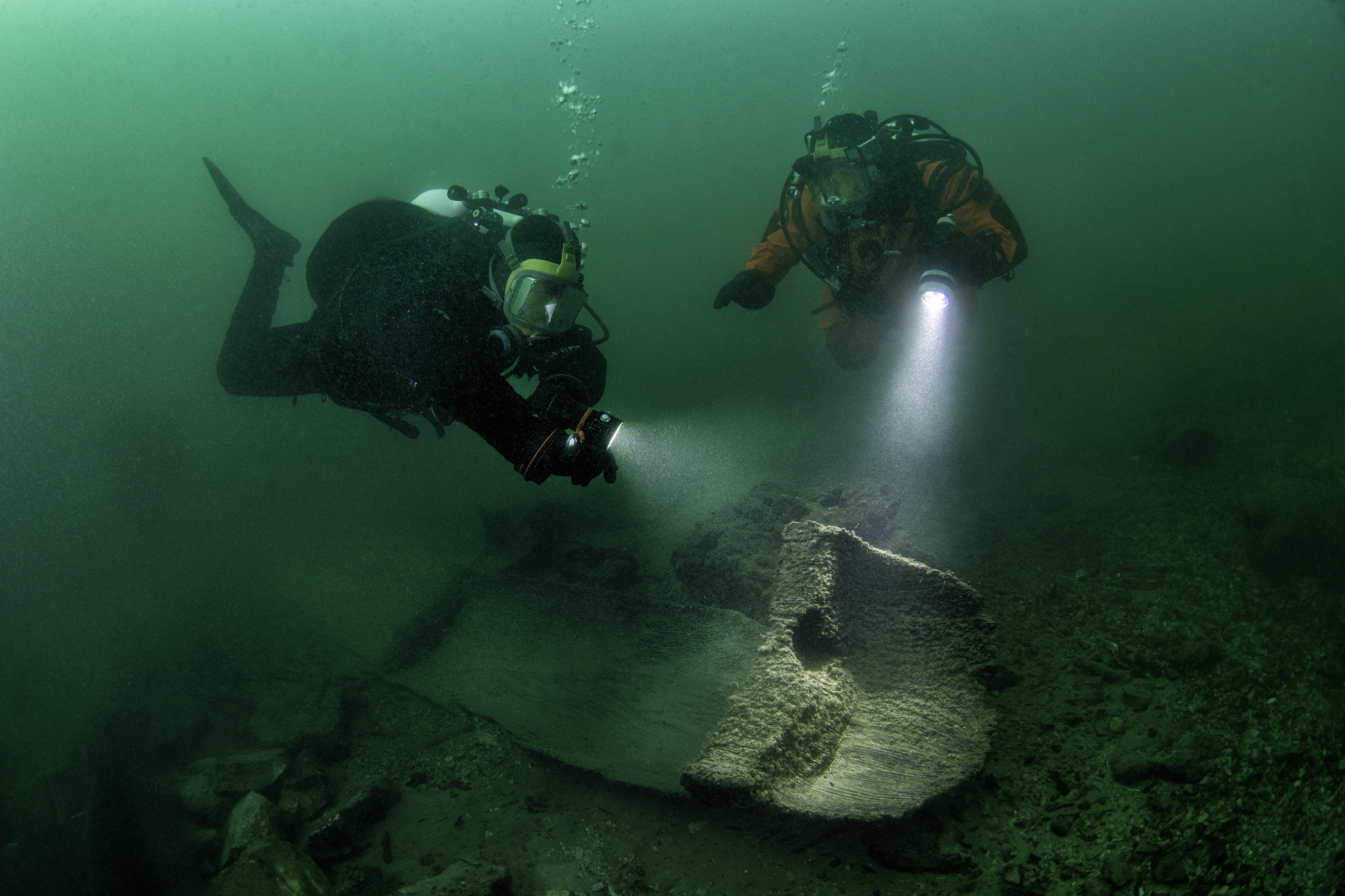
Deblak near Grajski kopališč, at the bottom of Lake Blejsko (8th century), photo: Arne Hodalič.
Invitation to an exhibition

Secrets from the Water – 1st International Day of Underwater Cultural Heritage

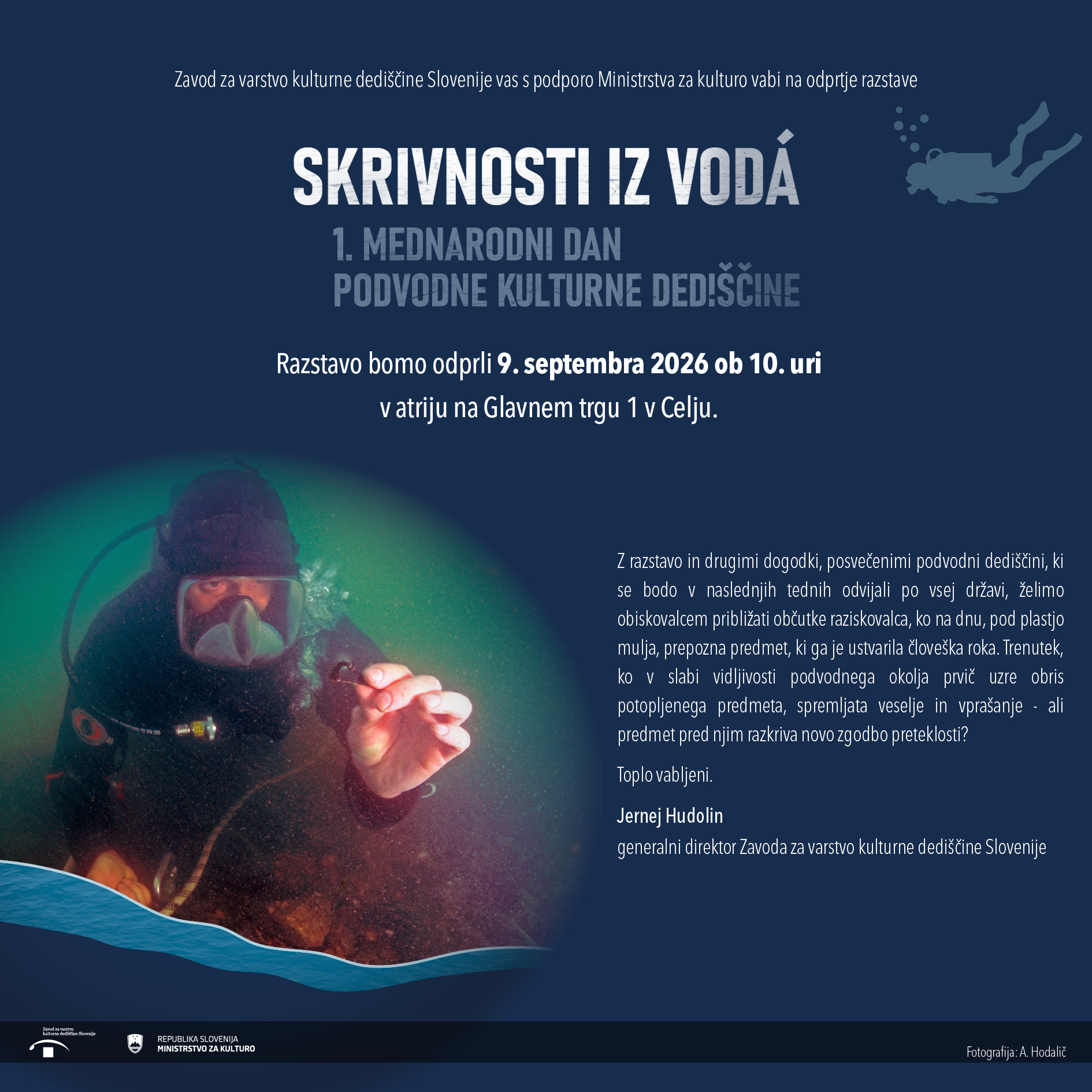
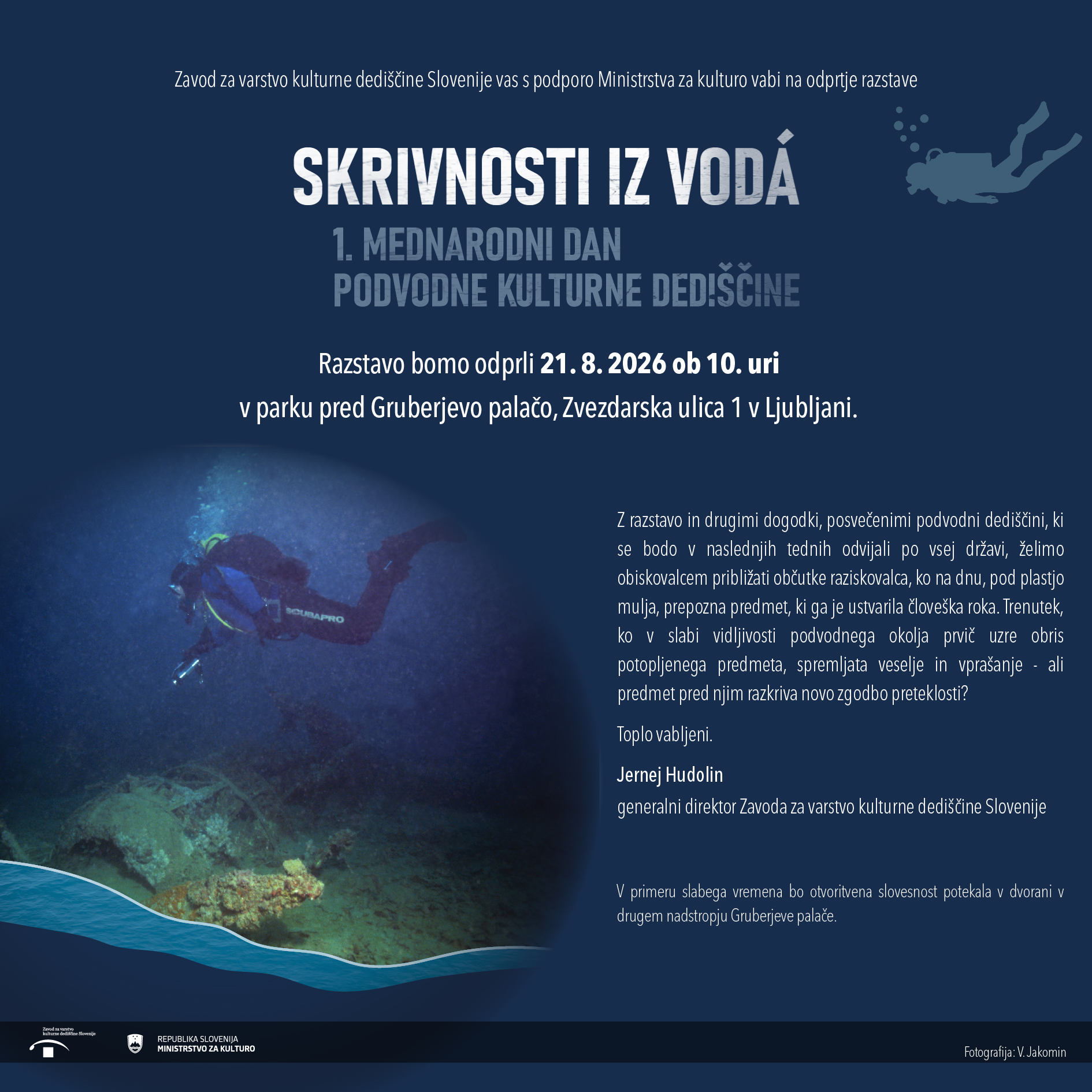
The exhibition Secrets from the Waters, created with the support of the Ministry of Culture, presents the richness and diversity of underwater cultural heritage and introduces visitors to the stories hidden beneath the surface of Slovenian rivers, lakes and seas. With the exhibition, the Institute for the Protection of Cultural Heritage of Slovenia joins the first celebration of the International Day of Underwater Cultural Heritage, which UNESCO declared for 2025. After the opening of the exhibition in front of Gruber's Palace in Ljubljana, the story of Secrets from the Water continues elsewhere in Slovenia as well. In September, the exhibitions will also be open in Celje and Izola, followed by further tours across Slovenia.

Underwater cultural heritage is an important, but mostly hidden part of our shared past. Beneath the surface of rivers, lakes and seas, traces of human activity are preserved – from sunken vessels, ports and bridges to the remains of settlements and objects that tell of everyday life, transport and trade over centuries and millennia.

Slovenia boasts one of the longest traditions of underwater archaeological research in Europe, as its origins date back to 1884, when Karel Dežman organized one of the first systematic underwater archaeological research in Europe in Ljubljana, near Vrhnika. Through the exhibition and events that will take place throughout Slovenia in the coming weeks, we want to bring underwater heritage and that special moment of discovery closer to visitors, when an archaeologist submerges underwater and identifies the remains that have remained there hidden for centuries or even millennia.
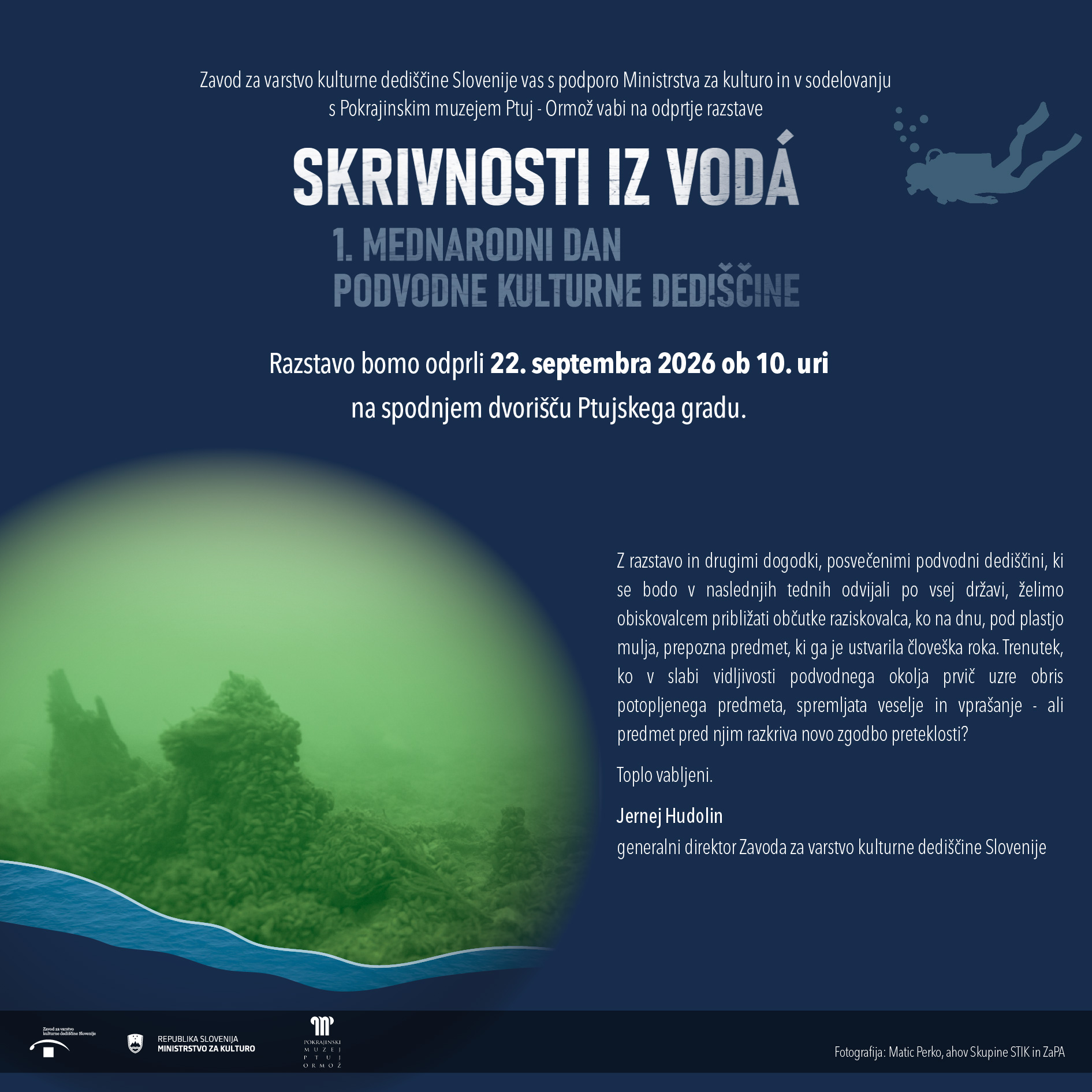
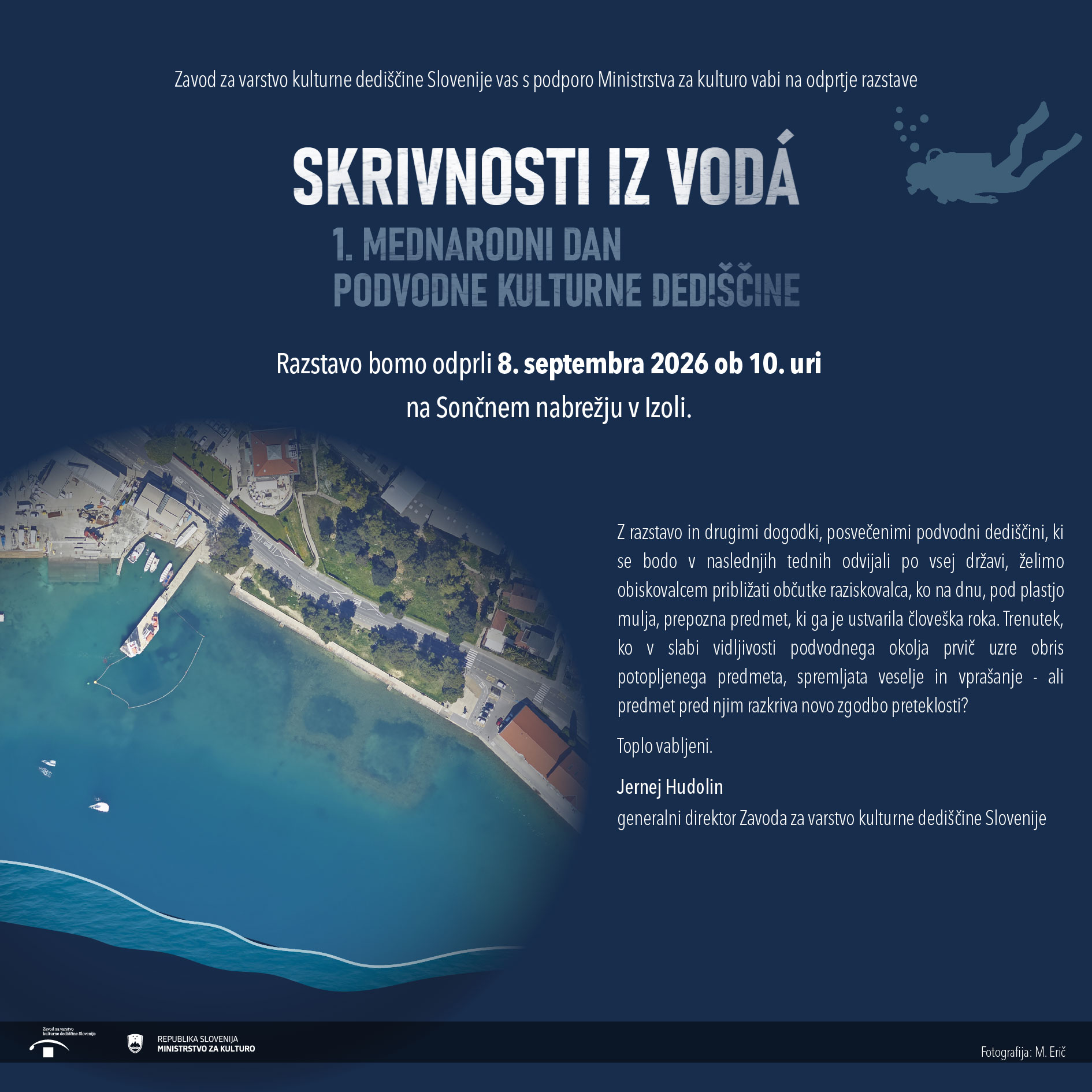
Among the stories the exhibition highlights are the Celtic-Roman ruins from Ljubljanica, the ruins of the bottom of Lake Bled, the wreckage of the Nina and Maria Andrina trojans, and the remains of a seaplane in the Piranski Zaliv.

Exhibition before Gruberjevo the palace or at tour to end November 2026, in the future months See they will secrets from water z exhibitions and Others Events visited also elsewhere after To Slovenia.

The exhibition at the Celje Regional Unit headquarters will be open from 9th September 2026, while the exhibition at the Piran Regional Unit headquarters will be open from 8th September 2026.

We are also preparing an outdoor exhibition, with which we will be visiting various locations across the country in the coming months. Thus, in the second half of September 2026, as part of the Days of European Cultural Heritage and the Cultural Heritage Week, we will be visiting the Regional Museum of Ptuj Ormož; the exhibition will be set up in the lower courtyard of Ptuj Castle. This will be followed by a visit to Murska Sobota in cooperation with the Pomurje Museum Murska Sobota. In 2027, we will continue with visits in January 2027 in Kostanjevica na Krki, in February 2027 in Tolmin in cooperation with the Tolmin Museum, and on Vrhnika in cooperation with the Ivan Cankar Foundation. For details of the visits, we invite you to follow the News on our website.
News

Relevant information for owners gathered in one place.

School of Renewal logo
11. 3. 2026

CALL FOR PROPOSALS FOR THE 2026 RENEWAL SCHOOL AWARDS

READ
Gruber Palace becomes the new home of the Slovenian Institute for the Protection of Cultural Heritage Ljubljana, 25 February 2026 - Today, the Slovenian Institute for the Protection of Cultural Heritage (ZVKDS) inaugurated its new premises in Gruber Palace in Ljubljana. One of the most important Baroque settings in Slovenia has thus regained its distinct public mission - it has become the central administrative and professional centre of the national institution for the protection of cultural heritage. The premises were opened by the Minister of Culture, Dr Asta Vrečko, and the Director General of ZVKDS, Jernej Hudolin. The Ministry of Culture allocated EUR 370,000 for the renovation. At the opening ceremony, Minister Dr Asta Vrečko emphasised the broader context of the investments in the Institute's premises. The ZVKDS is one of our largest public institutions, with an extensive network of units across Slovenia, a restoration department and an archaeology department. Following the relocation of the Slovenian Archives, we have dedicated the baroque Gruber Palace in Ljubljana to a new public activity - the Institute for the Protection of Cultural Heritage, while renovating it and landscaping the park in front. The administration and various departments have moved in and will now work together, whereas previously some of them worked in rented premises. Last year, we completed the energy renovation of the buildings of the Institute's regional units in Kranj and Ljubljana, and this year we will move the Luška kapitania in Koper, where we will relocate the regional unit in Piran. This will preserve our heritage and create better working conditions for our staff.» The Director General stressed that the merger of key services of the ZVKDS under one roof will bring cost rationalisation, better communication, more efficient work processes and greater cohesion among employees. «Instead of five locations in Ljubljana, we will now work in three - Gruber Palace has become the heart of our operations.» «Today we are gathered in one of the most precious baroque settings in Slovenia. This is not just an architectural jewel. It is a place of knowledge, research, creativity and heritage that has shaped our identity over the centuries.» He added: «We believe that by coming to the palace, we are continuing the centuries-old spirit of exploration, creativity and responsible heritage care.» And he stressed the symbolic dimension of the opening: «This is not just a logistical gain. It is a symbolic gesture: we are the guardians of cultural heritage working in a place that is a world-class cultural monument. We have thus placed ourselves alongside many European heritage services, which are based in outstanding historic buildings.» History of the space Knowledge Gruber Palace was designed in the second half of the 18th century by the Jesuit, architect and scientist Gabriel Gruber as the headquarters of the Jesuit College. From the outset, it was conceived as a place of knowledge, research and teaching. It was the home of many scientists, including Jurij Vega, one of Slovenia's most prominent mathematicians and astronomers. The palace has retained outstanding architectural and artistic elements, including a monumental oval staircase and a richly painted chapel, and remains one of Ljubljana's key Baroque monuments.
25. 2. 2026

Gruber Palace becomes the new home of the Slovenian Institute for the Protection of Cultural Heritage

READ
29. 1. 2025

NUK II - Discovery of the Hippocavist in the Insulla XLVI area

READ

Search page IPCHS