Hrastovlje_church-Holy-Trinity
Celebrating

80 years since its foundation!

"On this day, eight decades ago, the first post-war Federal Law on the Protection of Cultural Monuments and Natural Sites of the Democratic Federal Yugoslavia, adopted in July 1945, established the Institute for the Protection and Scientific Study of Cultural Monuments and Natural Sites of Slovenia by a decree of the Ministry of Education."

Since then, the Heritage Service has grown, developed and consolidated its role as the guardian of cultural heritage. Today, it is an indispensable part of our community - committed to preserving the history, identity and values that bind us together.

On this auspicious occasion, we pay tribute to our visionary predecessors and express our sincere gratitude to all of you who have contributed with knowledge, dedication and heart to the story of our heritage.

Slovenia received its first republican law in 1948, when the Law on the Protection of Cultural Monuments and Natural Sites in the People's Republic of Slovenia (Official Gazette of the People's Republic of Slovenia, No 23/48) was adopted. On the basis of this Law, the Minister of Education of the People's Republic of Slovenia issued decisions on the protection of cultural monuments and natural sights (some of which are still valid and in use). In 1950, on the basis of the Regulation on the Structure and Work of the Institute for the Protection and Scientific Study of Cultural Monuments and Natural Sites of Slovenia (the Institute for Monument Protection of the Republic of Slovenia) (Official Gazette of the Republic of Slovenia, No 19/50), the Institute was given the abbreviated name of the Institute for Monument Protection of the Republic of Slovenia. Until Slovenia's independence, a number of federal and republican laws were enacted.

Author of this entry.


More:

News

Relevant information for owners gathered in one place.

Gruber Palace becomes the new home of the Slovenian Institute for the Protection of Cultural Heritage Ljubljana, 25 February 2026 - Today, the Slovenian Institute for the Protection of Cultural Heritage (ZVKDS) inaugurated its new premises in Gruber Palace in Ljubljana. One of the most important Baroque settings in Slovenia has thus regained its distinct public mission - it has become the central administrative and professional centre of the national institution for the protection of cultural heritage. The premises were opened by the Minister of Culture, Dr Asta Vrečko, and the Director General of ZVKDS, Jernej Hudolin. The Ministry of Culture allocated EUR 370,000 for the renovation. At the opening ceremony, Minister Dr Asta Vrečko emphasised the broader context of the investments in the Institute's premises. The ZVKDS is one of our largest public institutions, with an extensive network of units across Slovenia, a restoration department and an archaeology department. Following the relocation of the Slovenian Archives, we have dedicated the baroque Gruber Palace in Ljubljana to a new public activity - the Institute for the Protection of Cultural Heritage, while renovating it and landscaping the park in front. The administration and various departments have moved in and will now work together, whereas previously some of them worked in rented premises. Last year, we completed the energy renovation of the buildings of the Institute's regional units in Kranj and Ljubljana, and this year we will move the Luška kapitania in Koper, where we will relocate the regional unit in Piran. This will preserve our heritage and create better working conditions for our staff.» The Director General stressed that the merger of key services of the ZVKDS under one roof will bring cost rationalisation, better communication, more efficient work processes and greater cohesion among employees. «Instead of five locations in Ljubljana, we will now work in three - Gruber Palace has become the heart of our operations.» «Today we are gathered in one of the most precious baroque settings in Slovenia. This is not just an architectural jewel. It is a place of knowledge, research, creativity and heritage that has shaped our identity over the centuries.» He added: «We believe that by coming to the palace, we are continuing the centuries-old spirit of exploration, creativity and responsible heritage care.» And he stressed the symbolic dimension of the opening: «This is not just a logistical gain. It is a symbolic gesture: we are the guardians of cultural heritage working in a place that is a world-class cultural monument. We have thus placed ourselves alongside many European heritage services, which are based in outstanding historic buildings.» History of the space Knowledge Gruber Palace was designed in the second half of the 18th century by the Jesuit, architect and scientist Gabriel Gruber as the headquarters of the Jesuit College. From the outset, it was conceived as a place of knowledge, research and teaching. It was the home of many scientists, including Jurij Vega, one of Slovenia's most prominent mathematicians and astronomers. The palace has retained outstanding architectural and artistic elements, including a monumental oval staircase and a richly painted chapel, and remains one of Ljubljana's key Baroque monuments.
25. 2. 2026

Gruber Palace becomes the new home of the Slovenian Institute for the Protection of Cultural Heritage

READ
12. 11. 2025

Great interest in guided tours of the renovated Collegio dei Nobili

READ
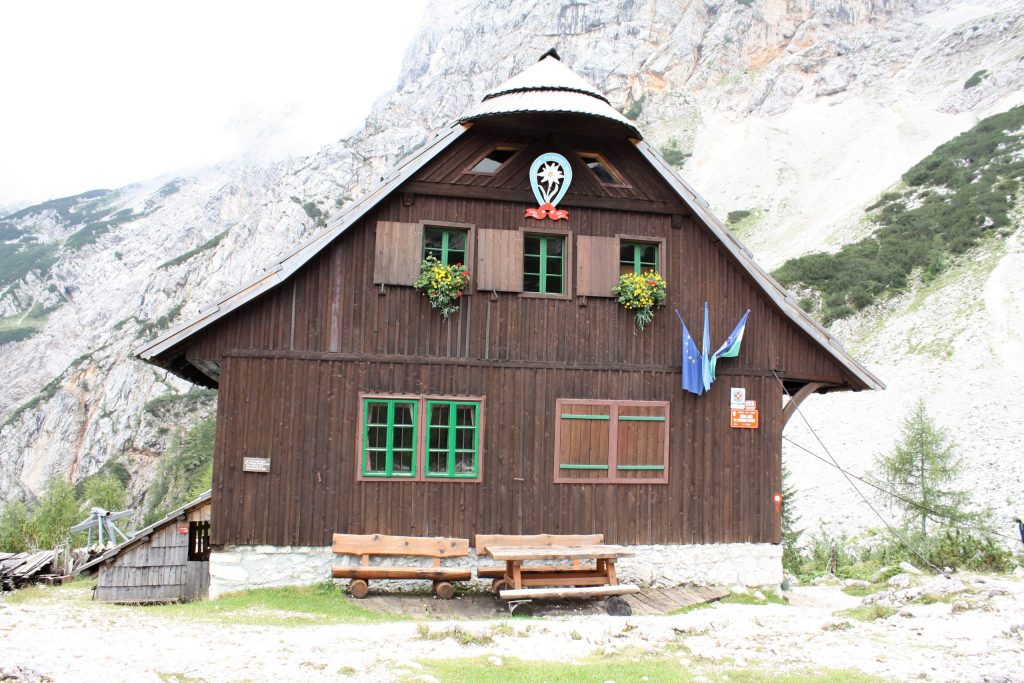
Czech hut
19. 6. 2026

Opening of the exhibition Czech Cabin

READ

Search page IPCHS